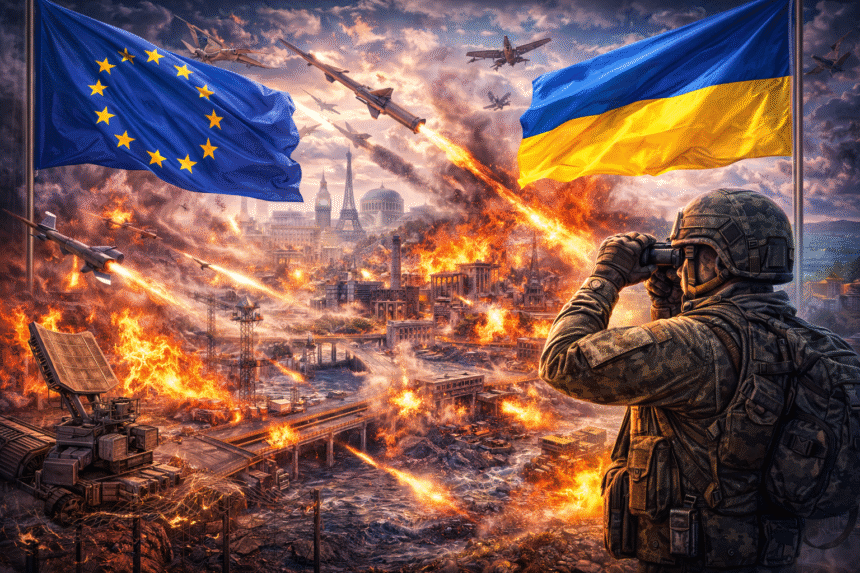
European leaders and security officials are expressing growing concern over a potential Russian escalation, as airstrikes on Ukrainian infrastructure continue and intensify, raising fears of broader regional instability.
Recent attacks have targeted key energy facilities, transport networks, and industrial sites across Ukraine, causing widespread disruptions to electricity, heating, and essential services. European officials warn that sustained strikes on critical infrastructure could deepen the humanitarian crisis while increasing the risk of spillover effects beyond Ukraine’s borders.
EU diplomats and defense analysts say the pattern of attacks suggests a strategy aimed at weakening Ukraine’s resilience during a critical phase of the war. The continued use of missiles and drones has heightened alarm in European capitals, particularly in countries close to the conflict zone, where officials are monitoring airspace security and military readiness.
Concerns are also mounting over the possibility of miscalculation or accidental escalation. NATO members have reiterated their commitment to collective defense while emphasizing the need to avoid direct confrontation. At the same time, European governments are accelerating discussions on strengthening air defense cooperation, intelligence sharing, and support for Ukraine’s defensive capabilities.
European Commission officials have warned that further escalation could have serious economic and security implications for the continent, including disruptions to energy markets and increased pressure on national defense systems. Calls have intensified for coordinated diplomatic efforts alongside continued military and humanitarian assistance to Kyiv.
As airstrikes persist, European leaders stress that the situation remains volatile. The coming weeks are seen as critical in determining whether the conflict stabilizes at its current intensity—or moves toward a more dangerous and unpredictable phase with wider consequences for Europe’s security landscape.