

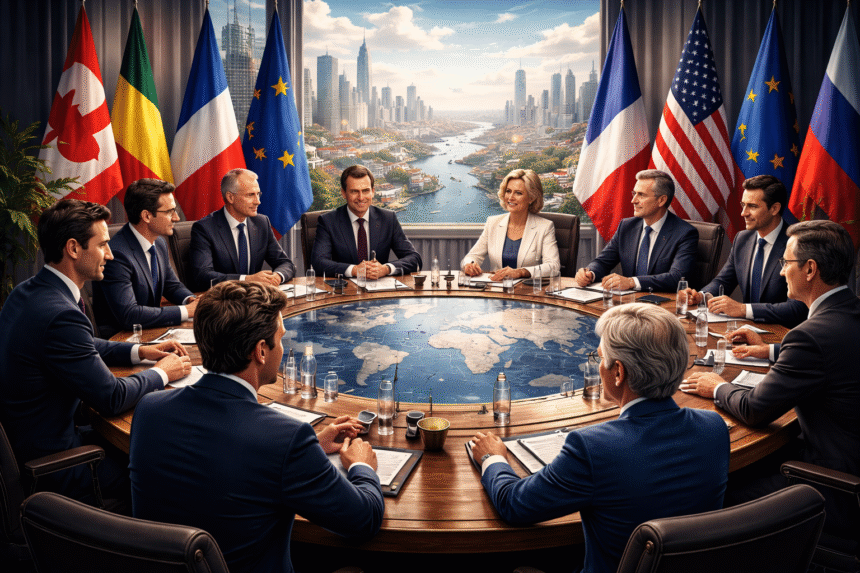
European and Canadian leaders held a series of consultations with U.S. officials this week to coordinate diplomatic strategies aimed at ending the war in Ukraine, but warned that recent statements from Russian officials could complicate the delicate negotiations.
According to diplomats familiar with the talks, representatives from major European Union countries, along with Canada, exchanged views with Washington on possible frameworks for a ceasefire and long-term security arrangements. The discussions focused on humanitarian access, reconstruction, and conditions required to ensure that any peace agreement does not collapse.
Cautious Optimism — With Major Reservations
Officials involved in the dialogue stressed that momentum exists on several diplomatic tracks. However, they emphasized that Russia’s latest rhetoric — including public insistence on maintaining territorial claims and threatening language regarding Western involvement — risks undermining confidence in the process.
A senior European diplomat noted that “constructive negotiations require signals of de-escalation, not ultimatums broadcast to domestic audiences.”
Leaders also expressed concern that Moscow may attempt to use negotiations as leverage while continuing military operations on the ground.
Unified Approach Among Allies
Canada reiterated its position that peace cannot come at the expense of Ukraine’s sovereignty. European leaders echoed this stance, urging unity within NATO and the European Union to avoid fragmented diplomatic initiatives that Russia could exploit.
Washington, meanwhile, has encouraged allies to stay engaged in coordinated diplomacy while continuing military and economic support to Kyiv — a dual strategy that some officials describe as necessary to keep Russia at the negotiating table.
The Road Ahead
Analysts say that Russian messaging remains one of the biggest obstacles. Statements hinting at permanent control over occupied territories or threats against Western countries cast doubt over Moscow’s willingness to accept verifiable guarantees in any future agreement.
Still, Western leaders believe ongoing dialogue is essential.
“We must keep every diplomatic channel open — even when progress is slow,” one European official said.
For now, discussions will continue at working-group level, with the hope that evolving political pressures — both domestic and international — may eventually create space for genuine compromise.