

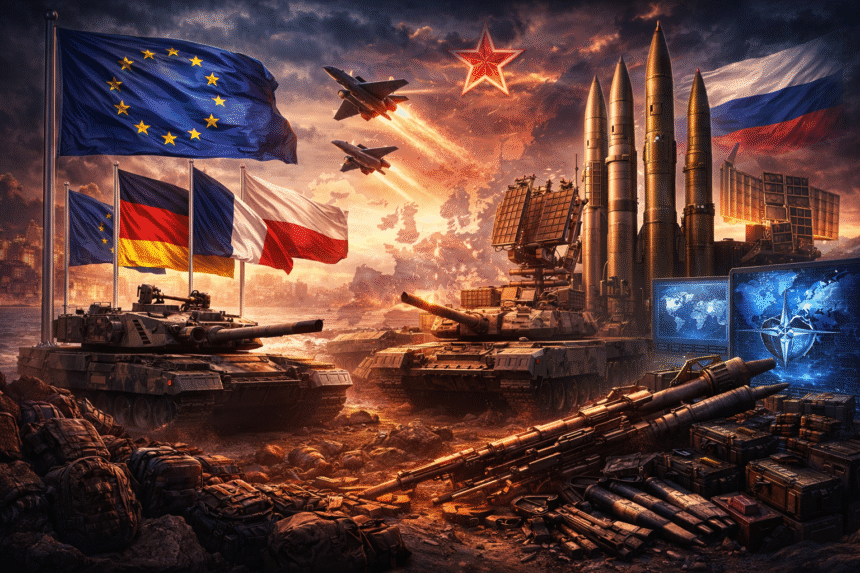
Europe has emerged as the world’s largest importer of weapons, reflecting a major shift in the continent’s security posture as geopolitical tensions—particularly with Russia—continue to intensify.
In recent years, European nations have significantly increased their defense spending, driven by concerns over regional stability, military readiness, and the need to deter potential threats. The war in Ukraine and broader tensions with Russia have accelerated this trend, pushing governments to modernize their armed forces and replenish depleted stockpiles.
Countries across Eastern and Northern Europe have been at the forefront of this buildup. Nations such as Poland, Finland, and the Baltic states are investing heavily in advanced الدفاع الجوي systems, missile capabilities, and armored القوات، in response to perceived risks along NATO’s eastern flank. Meanwhile, Western European powers, including Germany and France, are also expanding military budgets and launching long-term defense programs.
The surge in imports includes a wide range of equipment—from fighter jets and air defense systems to drones and precision-guided munitions. Much of this hardware is sourced from the United States, as well as other NATO allies, reinforcing transatlantic defense ties.
This rapid militarization comes alongside broader strategic changes within Europe. NATO has strengthened its presence in Eastern Europe, while joint military exercises and coordinated الدفاع initiatives have increased in frequency and scale. Governments are also placing greater emphasis on defense industrial cooperation to reduce reliance on external suppliers over time.
However, the rise in arms imports has sparked debate within Europe. While many leaders argue that increased military capability is essential for security and deterrence, critics warn of escalating tensions and the potential for a prolonged arms race in the region.
Economically, the surge in defense spending is having mixed effects. On one hand, it is boosting الصناعات الدفاعية and creating jobs; on the other, it is placing pressure on public finances at a time when many countries are already facing economic challenges.
Looking ahead, Europe’s position as the leading global arms importer underscores a fundamental shift: security has once again become a central priority. As tensions with Russia persist and global instability grows, the continent appears set to continue strengthening its military capabilities in the years to come.