

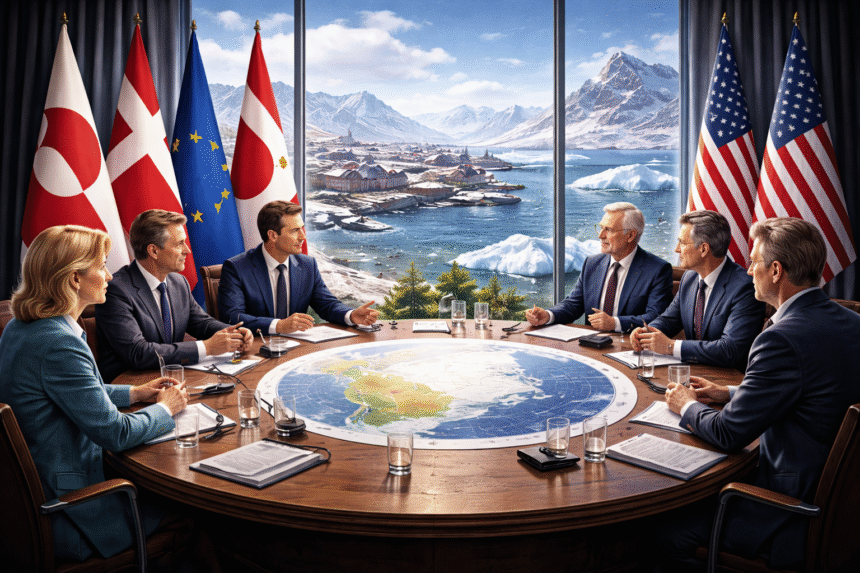
Growing diplomatic unease across Europe has turned into a clear collective message to Washington:
talk — don’t threaten.
European leaders are urging the United States to engage in transparent, respectful dialogue with Denmark and Greenland following renewed remarks from U.S. officials suggesting that the territory’s strategic value could justify intensified American pressure — or even attempts to secure direct control.
Greenland: Strategic, Autonomous — and Not for Sale
Greenland, a semi-autonomous part of the Kingdom of Denmark, has long been of interest to Washington due to its:
- location in the Arctic shipping and military corridors
- proximity to emerging polar trade routes
- vast deposits of rare minerals and energy resources
- hosting of the U.S. Pituffik Space Base (formerly Thule Air Base)
But European policymakers emphasize that Greenland’s future is determined by Greenlanders themselves, in partnership with Denmark — not by outside powers.
“Greenland belongs to its people,” several EU leaders reiterated, adding that sovereignty questions must be settled through diplomacy, legal agreements, and the will of voters — not unilateral pressure.
Why Europe Is Concerned
European capitals worry that aggressive rhetoric about “acquiring” Greenland or hinting at coercive options:
- risks undermining international law and territorial integrity
- creates unnecessary friction inside NATO
- signals that powerful states may rewrite borders unilaterally
- destabilizes Arctic cooperation at a sensitive moment
At the same time, Europe acknowledges the importance of U.S.–Greenland security cooperation — and wants it conducted within a respectful framework.
Dialogue as the Only Acceptable Path
EU diplomats are pushing the view that the Arctic should remain:
- an area of cooperation, not competition
- governed by existing treaties and agreements
- focused on climate change, research, and sustainable development
Their message to Washington is simple:
Engage, negotiate, respect sovereignty — and build trust.
Greenland’s Voice Front and Center
Greenland’s own leaders have echoed Europe’s position. They welcome partnership and investment — but reject any implication that their territory could be traded or controlled without consent.
They have called for continued dialogue that:
- strengthens local governance
- increases economic independence
- preserves cultural and environmental priorities
- ensures full consultation on defense and resource agreements
What Comes Next
With Arctic competition growing — involving the U.S., Russia, China, and Europe — diplomatic behavior in Greenland could shape future standards.
Europe hopes its stance sets the tone:
- alliances must respect sovereignty
- security must not override consent
- partnership works better than pressure
Whether Washington embraces that approach will determine not only the future of Greenland — but also the credibility of cooperation in the Arctic.