

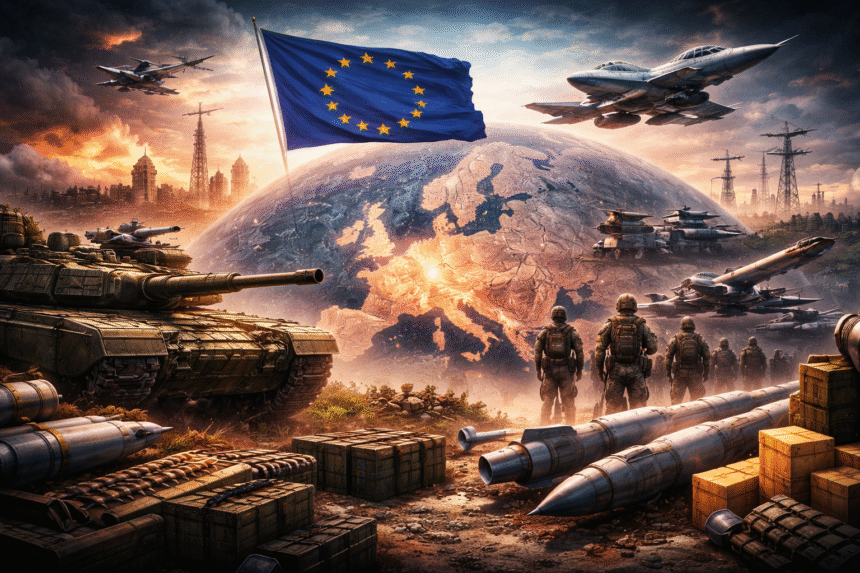
Europe has emerged as the world’s largest importer of weapons, marking a significant shift in global defense dynamics as regional tensions—particularly with Russia—continue to escalate.
The surge in arms imports reflects a broader strategic transformation across the continent, with governments prioritizing military readiness and long-term defense capabilities. This shift comes in response to growing concerns over regional security, ongoing conflicts near Europe’s borders, and the need to deter potential threats.
In recent years, European countries have significantly increased defense spending, reversing decades of military downsizing that followed the end of the Cold War. Nations such as Germany, Poland, and the Baltic states are leading the push, investing heavily in advanced weapons systems, air defense technologies, and modern military infrastructure.
The renewed focus on defense has been driven in large part by tensions with Russia, which have heightened security fears across Eastern and Central Europe. Policymakers argue that strengthening military capabilities is essential not only for deterrence but also for ensuring stability within the broader European region.
This unprecedented level of arms procurement includes fighter jets, missile defense systems, drones, and naval assets. Many countries are also working to upgrade their existing arsenals to align with modern warfare requirements, including cyber defense and intelligence capabilities.
While the increase in defense spending is seen as necessary by many European leaders, it has also sparked debate within the region. Critics warn that escalating military investments could strain public finances and divert resources from social and economic priorities.
At the same time, defense industry stakeholders view the trend as a long-term shift, signaling sustained demand for military equipment and deeper cooperation between European and allied defense suppliers, particularly the United States.
The implications of Europe’s rising arms imports extend beyond the continent. Analysts suggest that the trend could influence global arms markets, alter geopolitical balances, and potentially contribute to a broader militarization of international relations.
Despite these concerns, European leaders remain firm in their stance that the current security environment leaves little room for complacency. Strengthening defensive capabilities, they argue, is no longer optional—but a strategic necessity in an increasingly uncertain world.
As geopolitical tensions persist, Europe’s transformation into the world’s leading arms importer underscores a new era of defense prioritization—one that is reshaping both the continent’s security framework and the global balance of power.