

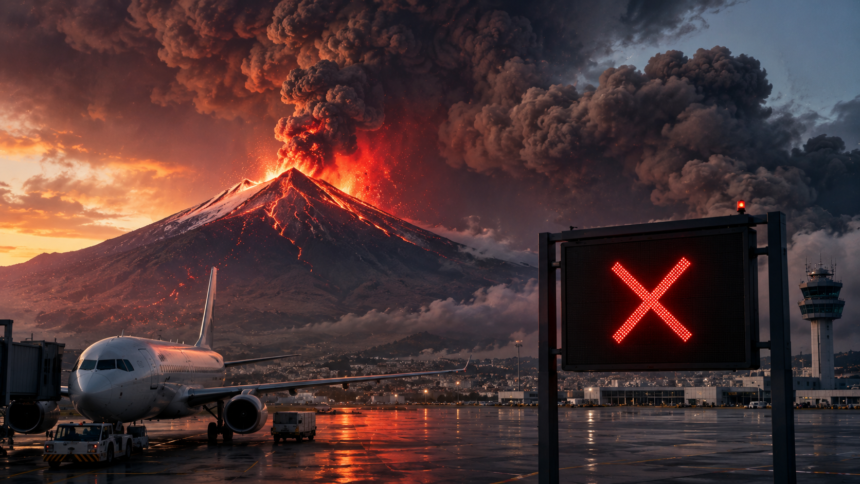
Flights at Catania Airport in Sicily will remain suspended until early Saturday as volcanic ash from the continuing eruption of Mount Etna disrupts air travel during one of Italy’s busiest summer holiday periods.
Airport authorities extended the shutdown until 2 a.m. local time on Saturday, August 15, after volcanic ash continued to affect the airspace around eastern Sicily. Passengers have been urged to check directly with their airlines before travelling to the airport because flight schedules remain subject to rapid changes.
The disruption follows days of interruptions at Catania–Fontanarossa Airport, where hundreds of flights have been cancelled, diverted or rescheduled since Etna entered its latest eruptive phase. The airport is Italy’s fifth-busiest by passenger traffic and serves one of the country’s most popular tourist regions.
Volcanic ash presents a significant hazard to aviation because fine particles can reduce visibility and potentially damage aircraft engines. Authorities therefore periodically restrict or close airspace around Catania when Etna sends substantial ash clouds toward flight paths.
The disruption has also placed additional pressure on other airports serving Sicily. Some affected flights have been diverted to alternative airports, including Palermo, Trapani and Comiso, while airlines have adjusted schedules and routes in response to changing volcanic conditions.
Mount Etna’s latest eruptive phase began on August 6 and has produced substantial volcanic ash. Experts have described the current episode as more intense than usual, contributing to repeated interruptions at the airport over the past week.
The closure comes during the peak European summer travel season, magnifying its impact on tourists travelling to and from Sicily. Hundreds of flights have already been affected, leaving airlines and passengers searching for alternative routes.
Mount Etna is Europe’s highest and most active volcano, and eruptions frequently affect communities and transportation around eastern Sicily. Airport operations will depend on volcanic activity, wind direction and the concentration of ash in the surrounding airspace.