

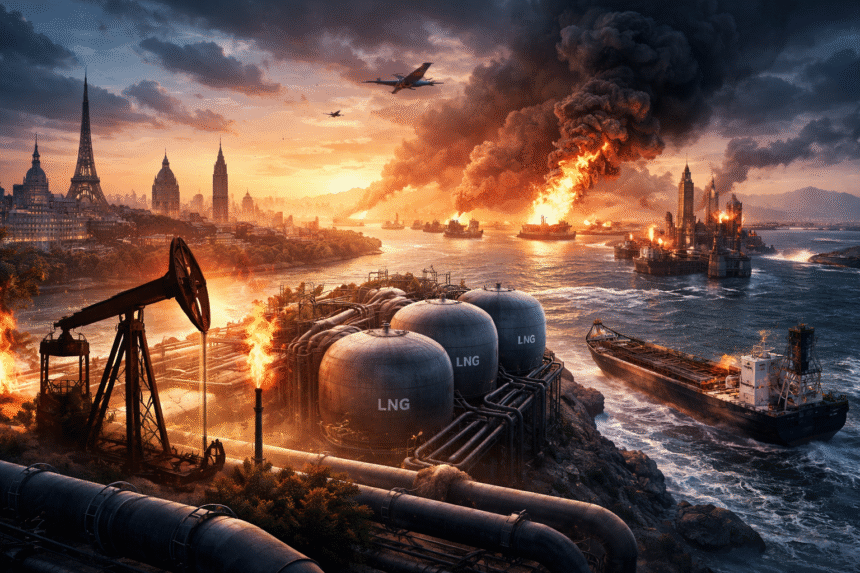
Europe is facing an extraordinary energy shock as natural gas and oil prices climb sharply in the wake of escalating conflict in the Middle East involving Iran, the United States, and Israel. The sudden disruptions to crucial supply routes and production infrastructure have sent ripples through energy markets, financial systems, and economic forecasts across the continent.
Sharp Jump in Gas and Oil Prices
European benchmark natural gas prices jumped more than 40 % at one point as markets reacted to massive disruptions in supply logistics and liquefied natural gas (LNG) output. Simultaneously, global oil benchmarks such as Brent crude climbed by roughly 8 % to over $80 per barrel, marking one of the steepest increases in the past decade.
The surge comes as QatarEnergy suspended LNG production after its Ras Laffan facility was hit, a plant that supplies about a fifth of global LNG exports. This move significantly tightened European gas markets, which rely on LNG to offset reduced pipeline flows from other regions.
Supply Chain and Transit Route Disruptions
At the heart of the crisis is the Strait of Hormuz, a vital maritime corridor through which nearly 20 % of the world’s oil and gas shipments pass. Following military strikes and counterattacks, tanker traffic has dropped sharply, and major shipping firms have suspended operations in the area due to rising risk and insurance constraints.
Many owners of oil and gas tankers have halted shipments across the strait, fearing losses or attacks — a development that has clogged global energy supply chains and worsened price pressures.
Economic and Market Impact
The spike in energy prices has broader implications beyond European households filling up heating bills. Economists warn of rising inflationary pressures and reduced economic growth prospects for the eurozone if higher energy costs persist. The European Central Bank’s top economist has cautioned that prolonged price spikes could significantly feed into broader inflation, potentially slowing growth across the region.
Stock markets in Europe have also felt the shock, with major indices dropping as investors braced for slower growth and higher input costs linked to energy.
Why Europe Is Particularly Vulnerable
Europe’s energy markets remain particularly sensitive to global disruptions due to their reliance on imported gas and LNG — a vulnerability amplified after efforts to reduce dependence on Russian pipeline gas. This reliance means that shocks to global energy exports — especially via routes like the Strait of Hormuz — can quickly translate into price volatility for consumers and businesses alike.
Looking Ahead
Experts underscore that the outlook remains uncertain. If the conflict continues and supply routes remain impaired, energy prices in Europe could remain elevated or even climb further, with knock-on effects for inflation, industrial activity, and consumer spending across the continent.