


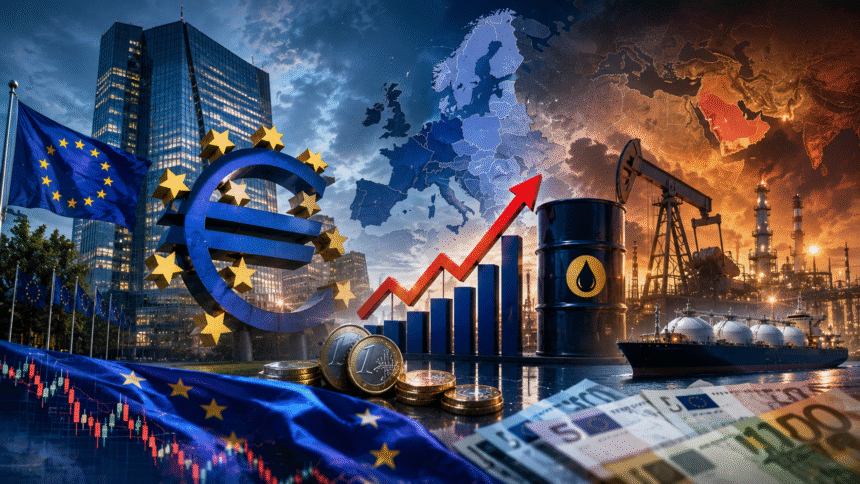
Economists are warning that the Eurozone could face renewed economic challenges as tensions in the Middle East continue to affect global energy markets and inflation trends. The concerns come as the European Central Bank has moved to tighten monetary policy in response to rising consumer prices and increasing energy costs.
Higher oil and natural gas prices have raised fears that inflationary pressures could remain elevated across Europe, increasing costs for businesses and households alike. Energy remains a critical factor for many European economies, making the region particularly sensitive to disruptions in global supply chains and geopolitical instability.
The European Central Bank’s decision to raise interest rates for the first time since 2023 reflects growing concerns about inflation becoming more persistent. While higher interest rates can help contain price growth, they also increase borrowing costs for consumers, companies, and governments, potentially slowing economic activity.
Analysts note that several sectors, including manufacturing, transportation, and heavy industry, could face additional pressure if energy prices continue to rise. Small and medium-sized businesses may be particularly vulnerable to higher financing and operating costs, while consumers could experience reduced purchasing power as living expenses increase.
European governments are closely monitoring developments in global energy markets and considering measures to protect households and businesses from further price shocks. Policymakers are also working to strengthen energy security through diversification of supplies, investment in renewable energy, and improvements in energy infrastructure.
Despite the challenges, some economists believe the Eurozone remains resilient due to relatively stable labor markets, ongoing investment programs, and gradual improvements in energy diversification. However, they caution that prolonged geopolitical tensions could complicate efforts to sustain economic growth while bringing inflation back under control.
As uncertainty persists, financial markets and policymakers will continue to watch developments in the Middle East closely, recognizing that regional instability could have significant consequences for inflation, energy prices, and the broader European economy in the months ahead.