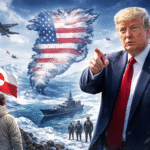



The foreign ministers of Denmark and Greenland are heading to Washington for a critical meeting with U.S. Vice President JD Vance, as diplomatic tensions intensify over recent American statements regarding Greenland’s security and status.
The talks come amid what officials describe as a growing diplomatic crisis, sparked by renewed rhetoric from U.S. President Donald Trump suggesting that Washington alone is capable of protecting Greenland. The comments triggered strong reactions in Copenhagen and Nuuk, where leaders reaffirmed Greenland’s autonomy and Denmark’s responsibility for its defense in coordination with NATO.
According to diplomatic sources, the meeting with Vice President Vance is intended to clarify positions, reduce tensions, and prevent further deterioration in relations between long-standing allies. Danish officials are expected to emphasize that Greenland is not a bargaining chip in geopolitical competition, while Greenland’s representatives will stress the island’s right to self-determination and its rejection of any external pressure over its future.
At the center of the dispute lies Greenland’s growing strategic importance in the Arctic. Melting ice has opened new shipping routes and increased interest in natural resources, while heightened military competition among major powers has made the region a focal point of global security planning. The United States maintains a military presence in Greenland, but Denmark insists that existing arrangements already address collective security needs.
Observers say the outcome of the meeting could shape the tone of U.S.–European relations in the Arctic for months to come. While both sides publicly underline their commitment to dialogue and alliance unity, the talks are widely seen as a test of Washington’s approach toward its European partners at a time of rising global tensions.
For Denmark and Greenland, the visit represents an effort to contain the crisis diplomatically before it escalates further, underscoring that Arctic security, they argue, must be built on cooperation rather than unilateral claims.