


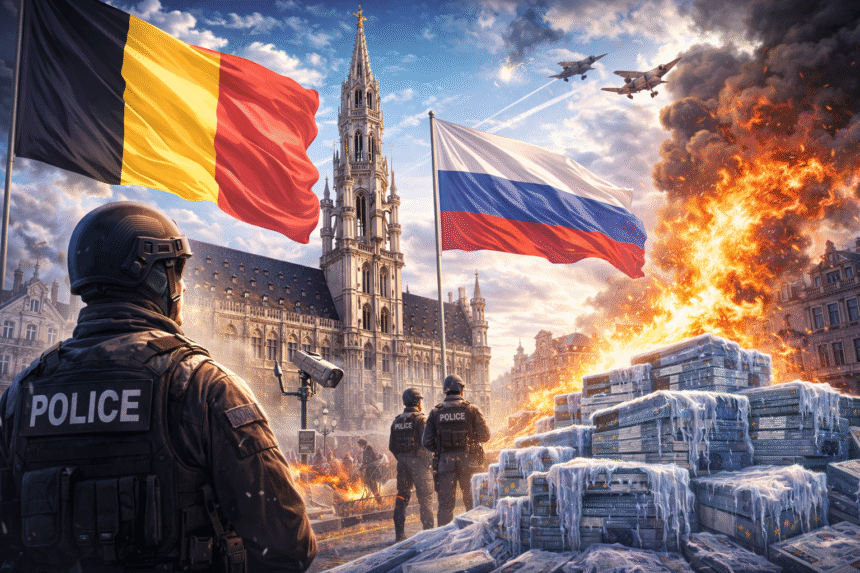
Belgium is under growing diplomatic and security pressure amid intensifying discussions in Europe about using frozen Russian assets to support Ukraine in its confrontation with Moscow. The issue has placed Brussels at the center of a sensitive geopolitical debate, as a significant share of Russia’s immobilized financial assets are held within Belgian jurisdiction.
European officials have increasingly explored ways to channel frozen Russian state funds toward Ukraine’s reconstruction and defense needs. While supporters argue that such a move would be both legally justified and morally necessary, critics warn of serious legal, financial, and security risks—many of which Belgium is now confronting directly.
Why Belgium Is at the Center
Belgium plays a pivotal role because Brussels hosts major international financial infrastructure, including clearing systems where large volumes of Russian assets are parked. This makes the country a key stakeholder in any decision to repurpose those funds.
Belgian authorities have acknowledged that discussions around the assets have triggered political pressure, diplomatic intimidation, and security concerns, including warnings of potential retaliation from Russia. Officials have not detailed specific threats but have confirmed heightened vigilance around critical financial institutions.
Legal and Financial Risks
Belgium has expressed concern that confiscating or redirecting frozen assets could:
- Set precedents that undermine international financial stability
- Trigger legal challenges from asset holders
- Damage trust in Europe as a safe place for global reserves
Belgian policymakers stress that any decision must be anchored in a solid legal framework agreed at the European and international levels, rather than unilateral action that could expose individual countries to disproportionate risk.
European Unity Tested
The debate has revealed differing positions among EU member states. Some governments are pushing for swift action to demonstrate resolve against Russia, while others—Belgium among them—are urging caution and coordination.
Brussels has emphasized that it supports Ukraine politically and financially, but insists that collective EU decisions are essential to avoid fragmenting Europe’s financial system or leaving single states vulnerable to retaliation.
Security Concerns and External Pressure
Beyond legal challenges, Belgian officials have warned that the discussion itself has heightened security concerns. Russia has repeatedly condemned any attempt to use its frozen assets, describing such moves as “theft” and vowing consequences.
Analysts say Belgium’s exposure highlights the broader risks Europe faces as economic and financial tools become central instruments of geopolitical confrontation.
What Comes Next
EU leaders are continuing negotiations on possible mechanisms, including using profits generated by frozen assets rather than the principal itself—a compromise seen as legally safer. Belgium has signaled support for such approaches, provided they are implemented at the EU level and backed by international law.
As the war in Ukraine continues, Belgium’s position illustrates the complex balance between accountability, solidarity with Ukraine, and protection of Europe’s financial and security interests—a balance that remains far from settled.