


By using this site, you agree to the Privacy Policy and Terms of Use.
Accept
Euro Post.Euro Post.
Notification Show More
Aa
  • My Europe
    • Europe News
    • Social Issues
    • Immigration
    • EU Policies
    • EU Updates
  • World
    • Africa
    • Global Conflicts
    • Human Rights
    • Middle East
    • Latin America
    • Ukraine Crisis:
  • Business
    BusinessShow More
    Lamborghini Unleashes the Temerario: A Hybrid Supercar Poised to Surpass the Huracán
    July 26, 2025
    Is Waze Nearing the End of the Road? Google Maps Growth Raises Questions About the Future of the Navigation App
    July 26, 2025
    Germany Secures Fourth Conviction in €195 Million EU-Wide VAT Fraud Case Tied to Covid Mask Scam
    July 25, 2025
    AstraZeneca Commits $50 Billion Investment in U.S. Amid Tariff Pressures
    July 23, 2025
    ASML Shares Fall as Trump-Era Tariff Fears Cloud 2026 Growth Outlook
    July 17, 2025
  • Sport
  • Travel
  • Culture
    • Art/Design
    • Literature
    • Music
    • Film – TV
    • Fashion
Reading: A Sharp Surge in Gas Prices Hits Europe Amid Middle East Tensions and Hormuz Closure
Share
Aa
Euro Post.Euro Post.
  • My Europe
  • World
  • Business
  • Sport
  • Travel
  • Culture
Search
  • My Europe
    • Europe News
    • Social Issues
    • Immigration
    • EU Policies
    • EU Updates
  • World
    • Africa
    • Global Conflicts
    • Human Rights
    • Middle East
    • Latin America
    • Ukraine Crisis:
  • Business
  • Sport
  • Travel
  • Culture
    • Art/Design
    • Literature
    • Music
    • Film – TV
    • Fashion
Follow US
  • Advertise
© 2021 Euro Post Agency.com. All Rights Reserved.
Euro Post. > Blog > My Europe > Europe News > A Sharp Surge in Gas Prices Hits Europe Amid Middle East Tensions and Hormuz Closure
Europe News

A Sharp Surge in Gas Prices Hits Europe Amid Middle East Tensions and Hormuz Closure

World News
By World News Published March 26, 2026
Share

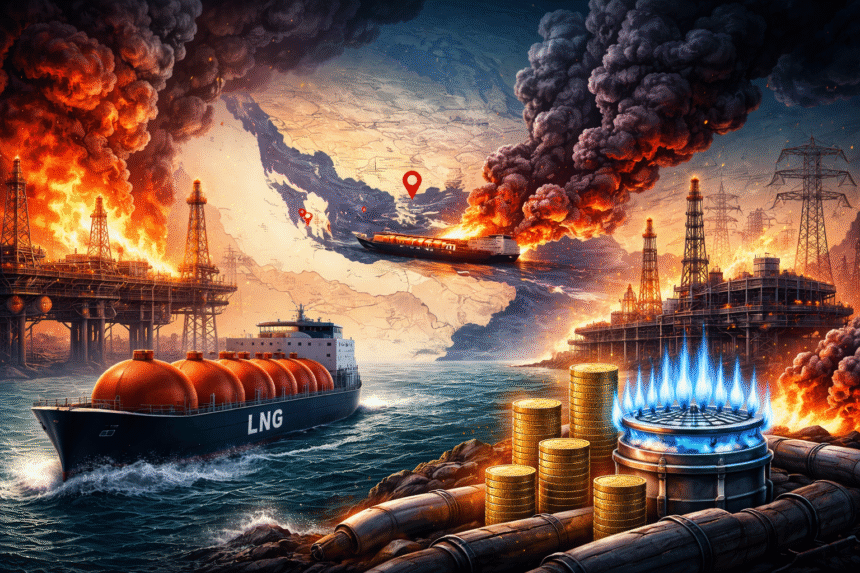
Europe is facing a sudden and severe energy shock after gas prices surged by nearly 50% within just a few days, driven by escalating tensions in the Middle East and the closure of the Strait of Hormuz—one of the world’s most critical energy transit routes.

The disruption has sent shockwaves through global energy markets, with European countries among the hardest hit due to their continued reliance on imported liquefied natural gas (LNG). Traders reacted immediately to fears of supply shortages, pushing benchmark gas prices sharply higher and triggering volatility across energy exchanges.

The Strait of Hormuz, through which a significant portion of the world’s oil and gas supplies pass, has become a focal point of geopolitical risk. Its closure has effectively tightened global supply chains, raising concerns over prolonged disruptions and the potential for further escalation in the region.

As a result, electricity prices across Europe have risen substantially. Power generation costs, heavily linked to gas prices in many European countries, have increased almost overnight. Governments are now under pressure to shield households and businesses from the financial impact, with some considering emergency measures such as price caps, subsidies, or strategic reserve releases.

Energy-intensive industries are also feeling the strain. Manufacturers warn that sustained high energy costs could lead to reduced production, layoffs, or even temporary shutdowns, echoing the challenges seen during previous energy crises.

European leaders have called for urgent international efforts to de-escalate tensions and restore stability to global energy routes. At the same time, the crisis is reigniting debates within the European Union over energy independence, diversification of supply, and the role of alternative energy sources, including nuclear and renewables.

Analysts caution that if the situation persists, Europe could face a broader economic slowdown. Inflationary pressures are expected to rise as higher energy costs ripple through supply chains, affecting everything from transportation to food prices.

In the short term, markets remain highly sensitive to developments in the Middle East. Any sign of reopening the Strait of Hormuz could ease prices, while further escalation may deepen the crisis.

For Europe, the message is clear: geopolitical instability far beyond its borders continues to have immediate and profound consequences on its economic stability and energy security.


You Might Also Like

European Countries Intensify Diplomatic Efforts to Reopen Strategic Strait

Divisions Emerge in Europe Over War Strategy, Weakening Unified Response

Europe Becomes World’s Largest Arms Importer as Security Concerns Intensify

European Stocks Hit Four-Month Low as Geopolitical Tensions Weigh on Markets

European Pressure Mounts to Reopen Strait of Hormuz Amid Fears of Global Economic Fallout

World News March 26, 2026 March 26, 2026
Share This Article
Facebook Twitter Whatsapp Whatsapp Email Print
What do you think?
Love0
Sad0
Angry0
Dead0
Previous Article Disagreements between the union’s countries regarding how to deal with the war and military escalation, with some countries preferring diplomatic solutions
Next Article European Pressure Mounts to Reopen Strait of Hormuz Amid Fears of Global Economic Fallout

Stay Connected

16k Like
85k Follow
45.6k Subscribe
Telegram Follow
- Advertisement -

Latest News

European Countries Intensify Diplomatic Efforts to Reopen Strategic Strait
Europe News
Divisions Emerge in Europe Over War Strategy, Weakening Unified Response
Europe News
Europe Becomes World’s Largest Arms Importer as Security Concerns Intensify
Europe News
EU Leaders Warn of New Refugee Wave as Middle East Conflicts Intensify
EU Updates
Loading

Stay Informed,Europ’s Vioce Unfolded

Sign Up for Our Newsletter

Subscribe to our newsletter to get our newest articles instantly!

Loading
© 2022 Euro Post Agency. All Rights Reserved.