


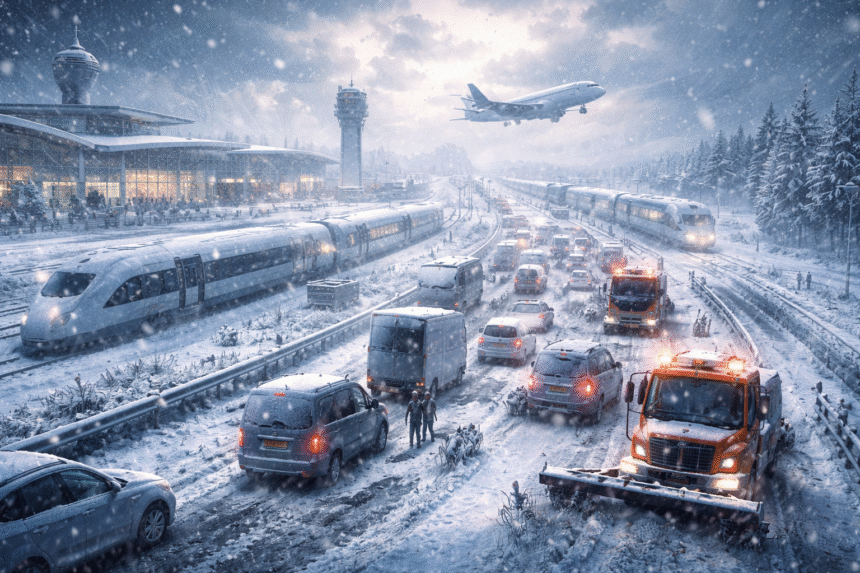
A powerful winter storm has swept across Europe, bringing heavy snowfall, freezing temperatures, and strong winds that have severely disrupted transportation networks across the continent. The storm, described by meteorological services as one of the strongest this winter, has forced widespread flight cancellations, rail suspensions, and road closures—hitting France particularly hard.
France at the Epicenter
France has emerged as one of the most affected countries. Major airports, including those serving Paris, were forced to cancel or delay hundreds of flights as snow accumulation and icy runways made operations unsafe. Rail services experienced major interruptions, with high-speed and regional trains suspended in several regions due to frozen tracks and power supply issues. Authorities urged residents to avoid non-essential travel as conditions rapidly deteriorated.
Continent-Wide Disruptions
The storm’s impact extended far beyond France. Large parts of Western and Northern Europe reported similar conditions:
- Air travel across the continent was severely disrupted, leaving thousands of passengers stranded at airports.
- Rail networks in multiple countries faced partial shutdowns as snow and ice affected signaling systems.
- Road transport suffered as highways were closed or restricted due to poor visibility and hazardous driving conditions.
Emergency services across Europe responded to hundreds of weather-related incidents, including traffic accidents, stranded vehicles, and power outages in rural areas.
Economic and Social Impact
The transportation paralysis has had immediate economic consequences, disrupting supply chains, delaying deliveries, and affecting tourism during a busy winter travel period. Schools and public institutions in several regions announced temporary closures, while businesses shifted to remote work where possible.
Authorities on High Alert
Governments and local authorities across Europe activated emergency protocols, deploying snowplows, de-icing crews, and rescue teams. Meteorological agencies warned that the storm could persist or be followed by additional waves of extreme cold, urging continued caution.
As Europe grapples with increasingly frequent and intense winter weather events, today’s storm serves as a stark reminder of the vulnerability of modern transport systems to extreme climate conditions—and the growing need for resilience and preparedness across the continent.