


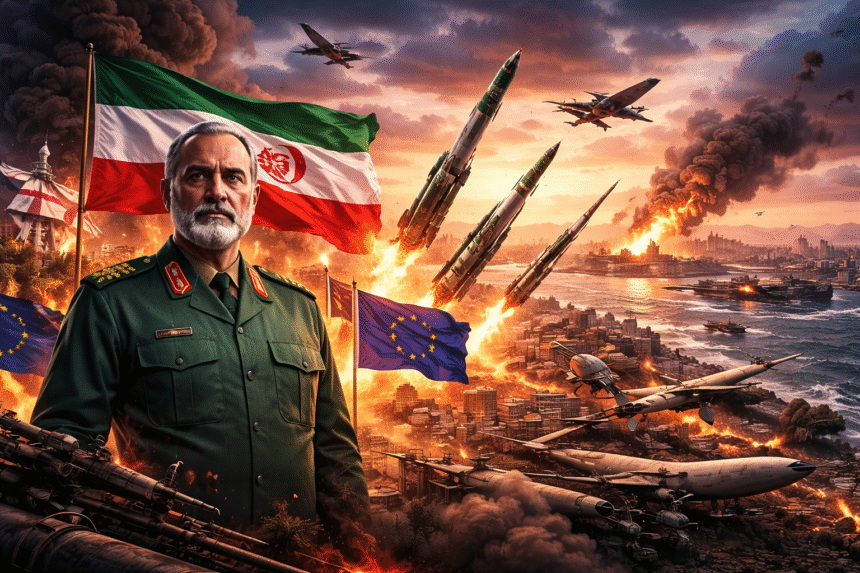
In a dramatic escalation of the widening Middle Eastern conflict, Iran issued a stark warning on Tuesday that any European country that actively participates in the U.S.–Israel military campaign against it will be treated as a direct belligerent, potentially triggering military responses from Tehran.
Iran’s Red Line: Participation Equals “Act of War”
At a press briefing on Tuesday, the Iranian Foreign Ministry spokesman, Esmaeil Baqaei, delivered an unequivocal message to European capitals — any direct involvement by European forces in military operations against Iran would be considered an “act of war.” He stressed that such involvement would be interpreted as complicity with what Tehran describes as “aggressors,” signaling a clear intention to respond militarily if that threshold is crossed.
Officials in Germany, France, and the United Kingdom have voiced preparedness to carry out “defensive actions” against Iranian missile and drone capabilities — statements that appear to have triggered Tehran’s warning. The three European powers had previously indicated willingness to help defend regional partners against Iranian attacks, particularly after Iranian drones struck the British military base at RAF Akrotiri in Cyprus.
Brussels on Edge: Political, Security and Economic Fallout
The threat has sent shockwaves through Brussels and EU capitals, where leaders are grappling with how to support allies without becoming entangled directly in combat. The European Union has repeatedly emphasized restraint, urging all parties to avoid further escalation and to respect international law. EU foreign ministers convened emergency talks earlier this week and issued a joint statement calling for “maximum restraint” amid intense concern over the regional crisis.
Europe’s hesitancy reflects not only diplomatic caution but also deep fear of widening the war zone. EU officials have underlined that their current role focuses on economic, humanitarian, and diplomatic channels, not combat operations, even as some member states face calls domestically to bolster defense cooperation with Washington and Tel Aviv.
The Wider Conflict Context
The warning follows intensified military activity across several fronts:
- U.S. and Israeli forces have launched sustained airstrikes on Iranian military and strategic infrastructure, in response to prior Iranian-backed missile and drone attacks targeting regional partners.
- Iran’s retaliatory strikes have extended to Gulf states and military installations associated with U.S. and allied forces.
These developments have fueled growing fears that the conflict could spill beyond the Middle East, ensnaring global actors who had sought to avoid a direct combat role.
European Reaction: Tightrope Between Support and Escalation
Brussels finds itself walking a sensitive diplomatic tightrope. On one hand, EU leaders decry Iran’s threats and condemn its attacks on allied and civilian targets. On the other, there’s a palpable reluctance to escalate military involvement that could legitimize Tehran’s framing of European participation as a new front in the war.
European capitals are watching closely how Tehran implements its threat and whether the warning will translate into concrete military actions against European soil or interests. The coming days could be decisive in whether diplomatic containment prevails or the conflict spreads into a broader international confrontation.