

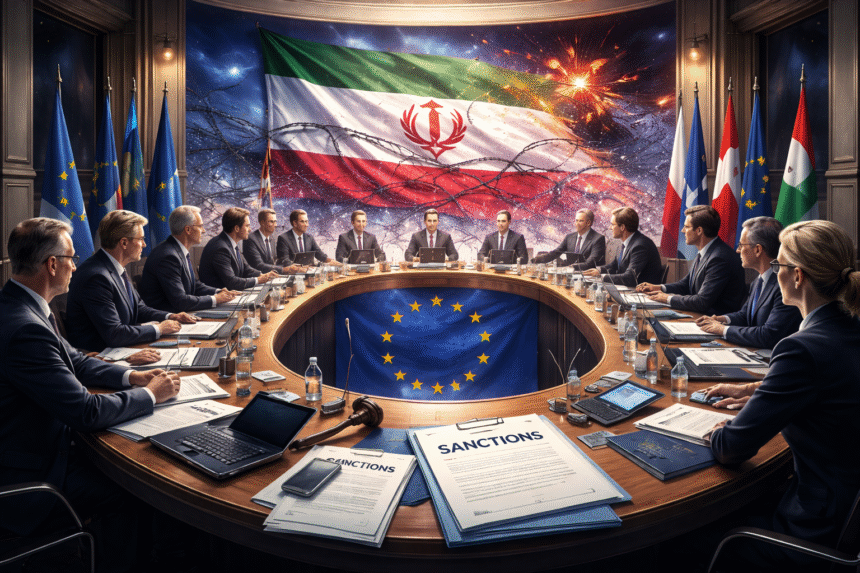
The European Union is intensifying discussions on imposing additional sanctions on Iran, reflecting deepening concerns over Tehran’s violent response to nationwide protests and ongoing human rights abuses. Senior EU officials and diplomatic sources say the bloc is preparing to expand punitive measures as part of its foreign policy toolkit.
At a press briefing in Berlin, Kaja Kallas, the EU’s High Representative for Foreign Affairs and Security Policy, confirmed that member states are debating new sanctions against Tehran. She noted that the existing EU sanctions regime is already substantial but “additional measures” are under consideration in response to reports of state repression.
Why Sanctions Are Being Considered
The recent push comes amid mass protests across Iran triggered by economic hardship and political discontent, which have been met with a harsh government crackdown. European leaders have condemned the use of force against demonstrators, underscoring violations of fundamental freedoms.
EU Commission President Ursula von der Leyen announced that the bloc intends to swiftly propose further sanctions targeting individuals believed responsible for human rights violations, criticizing both the scale of violence and ongoing restrictions on civil liberties.
Potential Scope of Measures
Although full details of the proposed sanctions have yet to be finalized, diplomatic briefings suggest they could include:
- Asset freezes and travel bans on additional Iranian officials linked to repression.
- Targeted restrictions on financial networks and entities tied to security apparatuses.
- Expansion of the EU’s existing human-rights sanctions framework against Tehran.
These would build on a sanctions regime the EU has maintained for years in response to both human rights abuses and Iran’s nuclear and missile programs. The existing sanctions include travel bans, asset freezes, and restrictions on technology transfers that could enable internal repression or destabilizing activities.
European Diplomatic Pressure Rises
Several EU capitals have already taken individual steps to signal dissatisfaction with Tehran’s conduct. Countries including France, Spain, and Finland have summoned Iranian envoys to protest the crackdown, highlighting coordinated European pressure alongside the bloc’s institutional actions.
Meanwhile, leaders in the European Parliament, including President Roberta Metsola, have urged colleagues to adopt tougher measures against Iranian authorities, arguing that stronger sanctions are necessary to uphold international human rights standards.
Balancing Policy and Influence
Despite the assertive rhetoric, the EU has stressed that its goals are focused on condemning abuses and promoting accountability, not regime change. European officials have reiterated that sanctions are intended to pressure behaviour, not alter Iran’s internal political system directly.
The relevant proposals are expected to be discussed among EU foreign ministers in the coming weeks. If agreed upon, the new sanctions would mark another significant step in the bloc’s evolving foreign policy towards Tehran at a time of intense international scrutiny.