

By using this site, you agree to the Privacy Policy and Terms of Use.
Accept
Euro Post.Euro Post.
Notification Show More
Aa
  • My Europe
    • Europe News
    • Social Issues
    • Immigration
    • EU Policies
    • EU Updates
  • World
    • Africa
    • Global Conflicts
    • Human Rights
    • Middle East
    • Latin America
    • Ukraine Crisis:
  • Business
    BusinessShow More
    Lamborghini Unleashes the Temerario: A Hybrid Supercar Poised to Surpass the Huracán
    July 26, 2025
    Is Waze Nearing the End of the Road? Google Maps Growth Raises Questions About the Future of the Navigation App
    July 26, 2025
    Germany Secures Fourth Conviction in €195 Million EU-Wide VAT Fraud Case Tied to Covid Mask Scam
    July 25, 2025
    AstraZeneca Commits $50 Billion Investment in U.S. Amid Tariff Pressures
    July 23, 2025
    ASML Shares Fall as Trump-Era Tariff Fears Cloud 2026 Growth Outlook
    July 17, 2025
  • Sport
  • Travel
  • Culture
    • Art/Design
    • Literature
    • Music
    • Film – TV
    • Fashion
Reading: European Union countries are facing divisions over how to deal with the war linked to Iran
Share
Aa
Euro Post.Euro Post.
  • My Europe
  • World
  • Business
  • Sport
  • Travel
  • Culture
Search
  • My Europe
    • Europe News
    • Social Issues
    • Immigration
    • EU Policies
    • EU Updates
  • World
    • Africa
    • Global Conflicts
    • Human Rights
    • Middle East
    • Latin America
    • Ukraine Crisis:
  • Business
  • Sport
  • Travel
  • Culture
    • Art/Design
    • Literature
    • Music
    • Film – TV
    • Fashion
Follow US
  • Advertise
© 2021 Euro Post Agency.com. All Rights Reserved.
Euro Post. > Blog > My Europe > EU Updates > European Union countries are facing divisions over how to deal with the war linked to Iran
EU Updates

European Union countries are facing divisions over how to deal with the war linked to Iran

World News
By World News Published March 5, 2026
Share

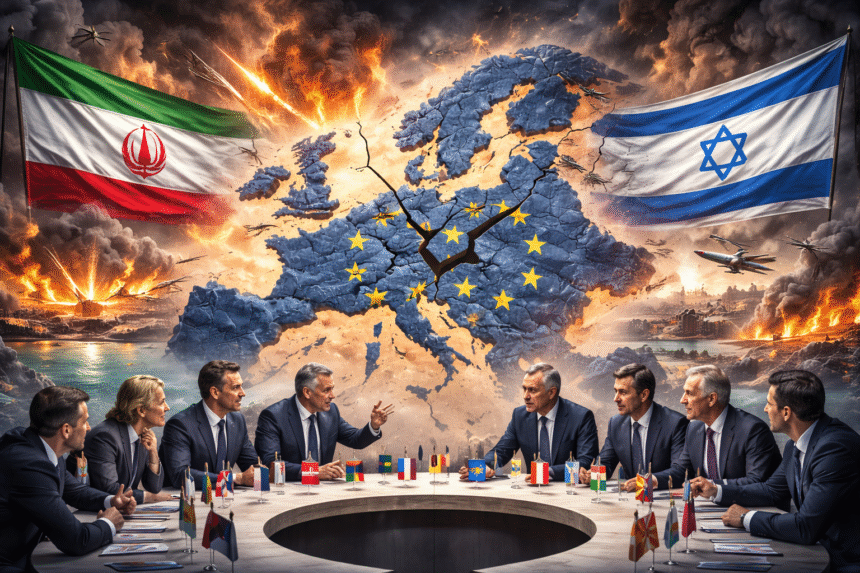
European Union countries are increasingly divided over how to respond to the escalating conflict connected to Iran, exposing significant differences in foreign policy priorities among the bloc’s member states.

As tensions in the Middle East intensified following military strikes involving Iran, the United States, and Israel, European leaders struggled to present a unified response. While some governments expressed concern about Iran’s regional activities and security threats, others emphasized the importance of diplomacy and warned against further military escalation.

Several European nations, including France, Germany, and the United Kingdom, have publicly distanced themselves from direct military involvement in the conflict. Their leaders have instead called for renewed diplomatic efforts and urged all sides to avoid actions that could trigger a broader regional war.

At the same time, differences have emerged within the European Union regarding the political and legal implications of the strikes on Iran. Some governments have voiced tacit support for Washington’s stance, citing concerns over Iran’s nuclear and missile programs, while others—such as Spain—have openly criticized the escalation and warned that military action could destabilize the entire Middle East.

The divisions also reflect broader concerns within Europe about the potential consequences of the conflict. Rising oil and gas prices, threats to shipping routes, and fears of wider regional instability have made European governments cautious about taking positions that could deepen the crisis.

Despite these disagreements, European officials have attempted to maintain a common diplomatic message. The European Union has expressed “utmost concern” about developments in the Middle East and reiterated calls for de-escalation, dialogue, and respect for international law.

Analysts say the current situation highlights the EU’s long-standing challenge of forming a unified foreign policy during major global crises. With member states balancing security interests, economic risks, and relations with allies such as the United States, Europe’s response to the Iran-linked conflict remains cautious and fragmented.

As the conflict continues to unfold, the ability of the European Union to overcome these divisions may determine whether the bloc can play a meaningful diplomatic role in preventing a wider regional war.
You Might Also Like

European Union Holds Emergency Meetings to Address Middle East Crisis and Coordinate Gas Supplies

Iran Threatens Military Response to European Countries if They Participate in War — A Major Escalation Raises Alarm in Brussels

Rising Beer Prices in EU Countries Put Pressure on Pubs and Consumers

Egypt’s Parliament Approves Participation in EU Research and Innovation Programme

Draghi Urges European Union to Unify Policies to Prevent Division and Industrial Decline

World News March 5, 2026 March 5, 2026
Share This Article
Facebook Twitter Whatsapp Whatsapp Email Print
What do you think?
Love0
Sad0
Angry0
Dead0
Previous Article Several European countries have begun reviewing nuclear defense plans and early warning systems
Next Article France, Italy, and Greece have started military coordination to protect navigation in the Red Sea

Stay Connected

16k Like
85k Follow
45.6k Subscribe
Telegram Follow
- Advertisement -

Latest News

The German Foreign Minister confirmed that Europe will not allow itself to be divided despite the differing positions of countries on international crises
Europe News
Financial markets in Europe recorded a decline due to tensions in the Middle East
Europe News
France, Italy, and Greece have started military coordination to protect navigation in the Red Sea
Europe News
Several European countries have begun reviewing nuclear defense plans and early warning systems
Europe News
Loading

Stay Informed,Europ’s Vioce Unfolded

Sign Up for Our Newsletter

Subscribe to our newsletter to get our newest articles instantly!

Loading
© 2022 Euro Post Agency. All Rights Reserved.