


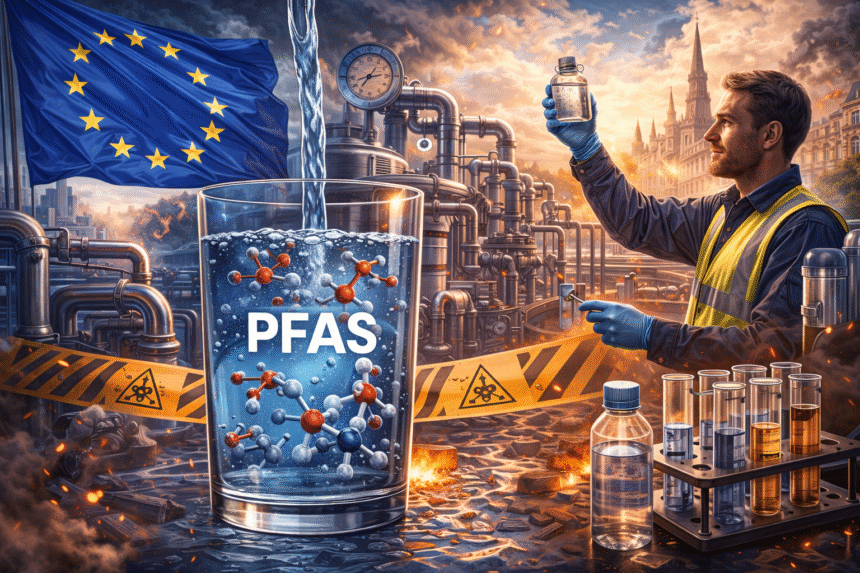
The European Union has officially begun implementing new rules to regulate the presence of PFAS chemicals in drinking water across all member states, marking a major step in strengthening public health and environmental protection.
PFAS—short for per- and polyfluoroalkyl substances—are a group of man-made chemicals widely used in industrial processes and consumer products such as non-stick cookware, firefighting foam, food packaging, and waterproof textiles. Often referred to as “forever chemicals,” PFAS do not break down easily in the environment and have been linked to serious health risks, including cancer, hormone disruption, immune system damage, and developmental issues.
Under the new EU rules, which form part of the revised Drinking Water Directive, member states are required to monitor and limit PFAS concentrations in public water supplies. The regulations introduce two key thresholds: one covering the total amount of selected PFAS compounds, and another setting a broader limit for all PFAS substances combined. Water suppliers must regularly test water quality and take corrective action if levels exceed the permitted limits.
The European Commission said the measures aim to ensure safe and clean drinking water for more than 450 million people, while also increasing transparency and public access to water quality information. National authorities are expected to upgrade monitoring systems, improve treatment infrastructure, and address contamination sources where necessary.
Several EU countries have already begun adapting their water systems, while others face significant challenges, particularly in areas affected by industrial pollution or historical use of PFAS-containing firefighting foams. Environmental groups have welcomed the move but warn that full enforcement will require substantial investment and political commitment at the national level.
EU officials stressed that the new rules are based on scientific assessments and reflect growing global concern over PFAS exposure. The regulations also align with the EU’s broader chemicals strategy for sustainability, which seeks to reduce harmful substances in the environment and move toward safer alternatives.
As implementation progresses, the European Commission will work with member states to ensure compliance, with the long-term goal of reducing PFAS pollution at its source and safeguarding public health across Europe.