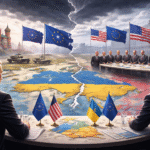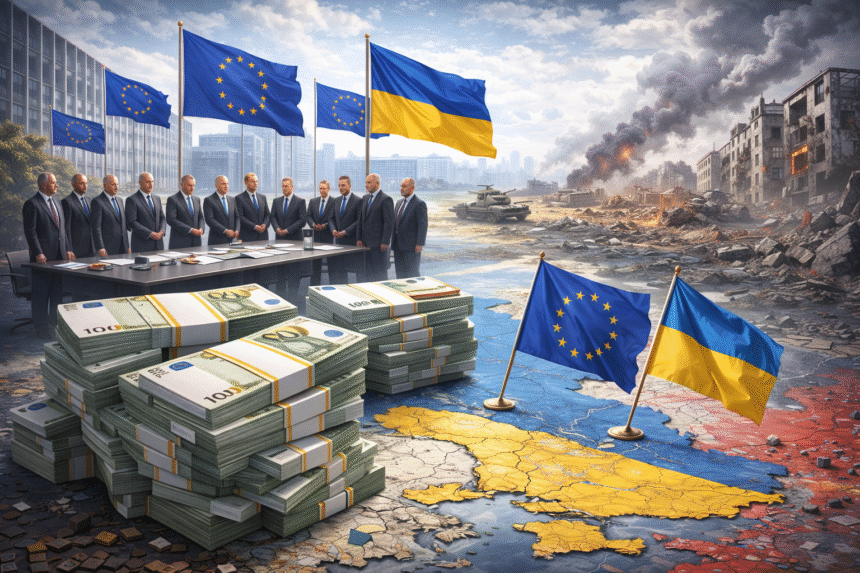
Leaders of the European Union have reached an agreement to provide a €90 billion loan package to Ukraine, aiming to strengthen Kyiv’s financial resilience as the war with Russia continues.
The decision follows weeks of intense negotiations over whether frozen Russian sovereign assets held in Europe could be directly used to finance Ukraine’s needs. Several EU member states raised legal and political concerns, warning that outright confiscation of those assets could set a risky international precedent and expose the bloc to legal challenges.
As a compromise, EU leaders opted for a large-scale loan mechanism, allowing immediate financial support for Ukraine while keeping frozen Russian assets untouched for now. The funds are expected to help cover budget shortfalls, maintain essential public services, and support defense-related expenditures during 2026–2027.
European officials emphasized that the agreement preserves EU unity while ensuring sustained backing for Ukraine. They stressed that the loan framework provides predictability for Kyiv at a time when the war continues to strain its economy, infrastructure, and social systems.
At the same time, discussions over Russian assets are far from settled. Several EU governments signaled that future mechanisms could still explore using profits generated from frozen assets, rather than the assets themselves, to assist Ukraine—an approach viewed as legally safer and politically less divisive.
Analysts see the €90 billion loan as one of the largest financial commitments ever made by the EU to a non-member state, underlining how deeply the conflict has reshaped European economic and security policy. It also reflects a broader shift toward long-term financial planning, as leaders increasingly acknowledge that the war is unlikely to end quickly.
With the agreement now in place, attention turns to implementation—how quickly funds will be disbursed, under what conditions, and how effectively they will stabilize Ukraine’s economy while reinforcing Europe’s strategic stance in the conflict.