

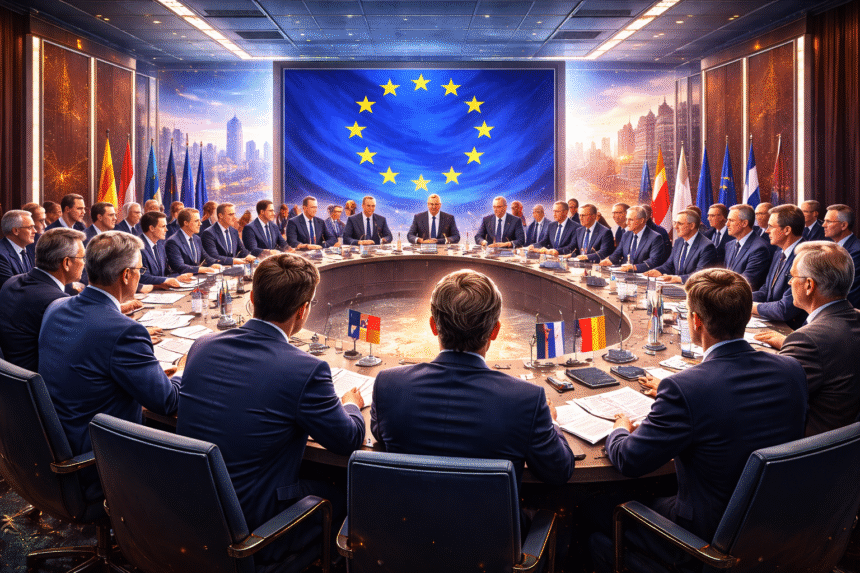
In response to escalating tensions with Washington over planned tariff measures, ambassadors from the 27 European Union member states convened an emergency meeting in Brussels to coordinate diplomatic efforts aimed at persuading the United States to drop its threat of levying punitive tariffs — and to prepare contingency measures in case those tariffs go ahead.
Urgent Diplomatic Gathering Amid Rising Frictions
The emergency meeting of EU ambassadors came after U.S. President Donald Trump announced intentions to impose escalating tariffs on European allies as leverage linked to his contentious push for influence over Greenland, an autonomous Danish territory. The meeting — called on short notice — reflects growing unease in Europe that the dispute could destabilize long-standing transatlantic relations.
Officials at the gathering agreed to intensify diplomatic channels with Washington in an effort to avert the implementation of the proposed tariffs. Leaders emphasized that economic pressures among close allies risk undermining cooperation on broader strategic issues, including security and trade.
Coordinated Response Planning
While pushing for diplomatic de-escalation, EU envoys also began outlining possible coordinated responses should the United States proceed with tariff impositions. European capitals are reportedly preparing options that range from retaliatory tariffs exceeding €90 billion on U.S. imports to the activation of the EU’s Anti-Coercion Instrument (ACI) — a powerful trade defense mechanism designed to counter economic coercion.
The Anti-Coercion Instrument, which has never been fully deployed before, could limit U.S. companies’ access to EU markets in key sectors if activated. European ministers described this tool as a necessary safeguard to defend the EU’s economic sovereignty and deter unilateral economic pressure from external partners.
Unity Across EU Capitals
European leaders have framed the U.S. tariff threat as an unprecedented challenge to transatlantic cooperation, with many capitals stressing the importance of presenting a united front in both diplomatic engagement and contingency planning. According to reports, EU governments are also aligning their positions ahead of a potential extraordinary summit of EU heads of state and government later this week.
The emergency talks coincide with wider discussions about transatlantic relations, trade stability and geopolitical cooperation, as the EU strives to balance efforts at dialogue with preparedness for stronger economic countermeasures if necessary.
Broader Implications
Analysts say this diplomatic mobilization demonstrates Europe’s resolve to resist coercive economic tactics while maintaining channels for negotiation. The outcome of these discussions could shape not only transatlantic trade policies but also broader cooperation on security, climate policy and global economic governance.