


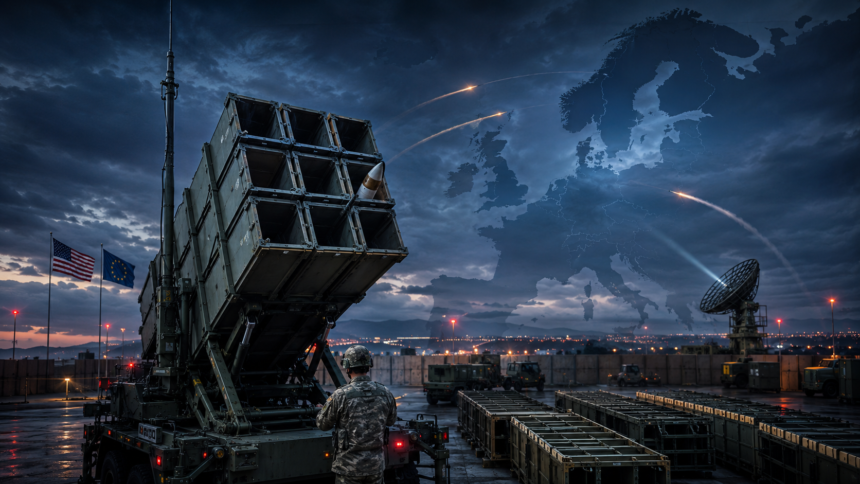
The United States is facing a severe shortage of Patriot missile interceptors stationed in Europe, raising concerns about NATO’s ability to respond to potential ballistic missile attacks at a time of escalating military tensions.
Current and former officials familiar with American and NATO defense planning told the Associated Press that the number of available interceptors had fallen to what some described as a “beyond critical” level.
The reported decline follows the transfer and use of large quantities of Patriot missiles in multiple conflict zones. Some interceptors previously positioned in Europe have been supplied to Ukraine, while others have been redirected to the Middle East to protect American forces and regional allies during the conflict with Iran.
According to the report, operations related to the Iran war consumed approximately 65% of the available American Patriot interceptor inventory. The unexpected scale and duration of the conflict intensified pressure on stocks that were already being stretched by support for Ukraine.
Patriot systems are considered particularly important because they can intercept ballistic missiles traveling at high speeds. These weapons pose a greater defensive challenge than most drones and conventional cruise missiles.
The shortage has generated concern about the protection of strategically important European locations, including military bases, command centers, airfields and civilian infrastructure. NATO planners have also been assessing the alliance’s ability to respond if Russia launches missiles against the territory of a member state.
Ukraine continues to request additional Patriot systems and interceptors as Russia intensifies its missile and drone attacks. Kyiv relies heavily on the American system to defend cities and critical facilities against ballistic weapons that other air-defense platforms may struggle to intercept.
The Pentagon and NATO, however, have disputed suggestions that their defensive capacity has fallen below a critical threshold. A senior NATO military spokesperson said the alliance retained sufficient air-defense munitions to protect its territory while continuing to support Ukraine.
The disagreement reflects the secrecy surrounding military stockpiles. Exact numbers are classified, making it difficult to independently assess how many interceptors remain available or how quickly they could be replaced.
Efforts are underway to expand Patriot missile production in both the United States and Europe. A planned manufacturing facility in Germany is expected to increase European production capacity, but new interceptors require considerable time to manufacture and deliver.
European countries are also investing in alternatives, including the French-Italian SAMP/T NG air-defense system. Although it could eventually reduce dependence on the Patriot, the newer platform has not yet accumulated the same level of combat experience.
The reported shortage highlights a broader challenge for NATO: modern conflicts can consume sophisticated and expensive munitions far more rapidly than Western defense industries can replace them.