

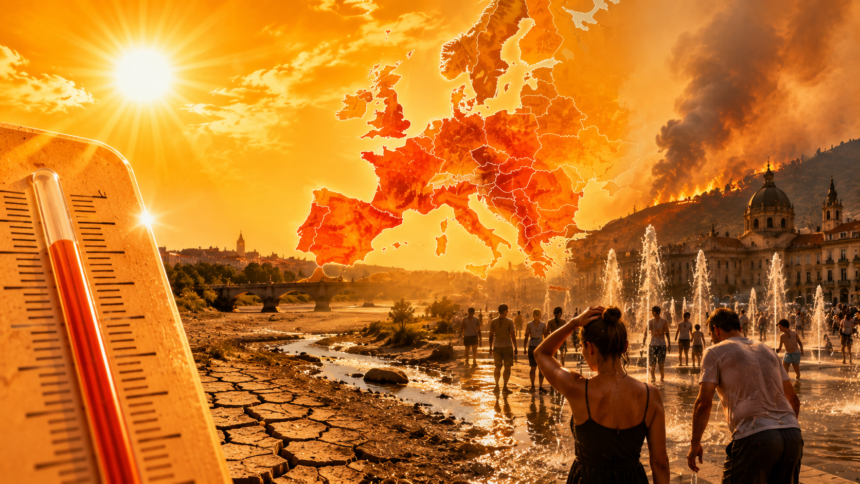
Europe’s extreme summer heat is continuing to shatter temperature records, with parts of Central and Eastern Europe experiencing unprecedented conditions as drought, wildfires and pressure on energy and transport infrastructure intensify.
Austria recently recorded 41.2°C in Bad Deutsch-Altenburg, the highest temperature ever measured in the country. Neighboring Slovakia also broke its national record, reaching approximately 42.2°C, while Hungary registered a peak of 41.8°C, surpassing its previous all-time high.
The records are part of a wider heatwave affecting much of the continent. Persistent high-pressure systems have trapped hot air over Europe, while unusually warm seas and extremely dry soils have helped amplify temperatures. The World Meteorological Organization says extreme heat events are becoming more frequent, intense and prolonged as the climate warms.
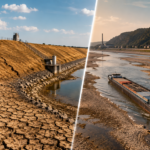
The consequences are extending far beyond uncomfortable temperatures. Severe drought has reduced river levels across Europe, threatening agriculture, drinking-water supplies, inland shipping and electricity generation. An estimated 204 million people in Western Europe were expected to experience temperatures more than 5°C above normal on August 11.
Energy infrastructure has also come under pressure. Low water levels have disrupted power generation in parts of Central Europe, while governments have faced increased electricity demand from air conditioning and cooling systems. In Poland, critically low water levels in the Vistula contributed to shutdowns at major coal-fired power plants, reducing available generating capacity.
Wildfire danger remains another major concern. Hot, dry vegetation has created highly combustible conditions across large areas of the continent, with hundreds of thousands of hectares already burned in the European Union this year. Fire-weather conditions have been particularly severe in countries including Austria, Czechia and Slovakia.
Meteorologists warn that the combination of persistent heat, drought and depleted water reserves could continue affecting Europe even after temperatures begin to fall. The latest records underline how the continent’s summer heatwaves are increasingly becoming prolonged emergencies affecting public health, agriculture, energy systems and critical infrastructure.