

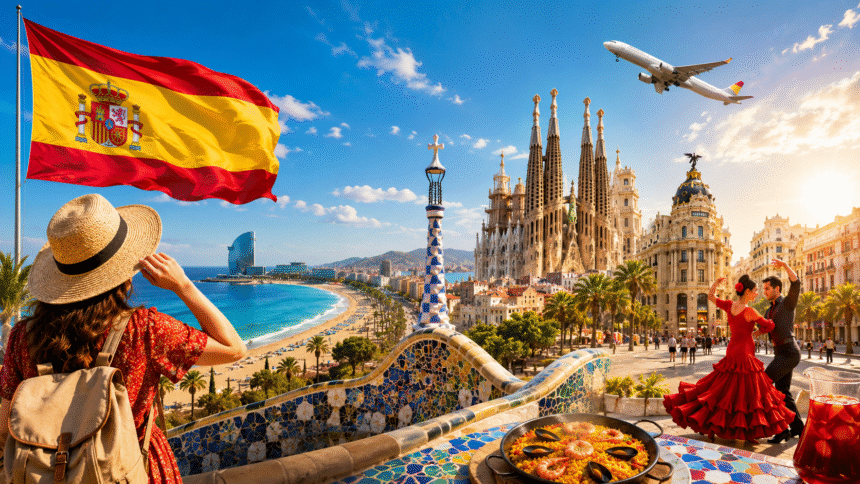
Spain is witnessing a strong revival in international tourism as growing economic and geopolitical uncertainty in other parts of the world pushes more travelers toward Southern Europe, boosting one of the country’s most important economic sectors.
Recent tourism data showed a noticeable increase in the number of foreign visitors arriving in Spain over the past few weeks, with major destinations such as Barcelona, Madrid, Valencia, Málaga, Ibiza, and the Canary Islands experiencing rising hotel bookings and increased travel activity ahead of the peak summer season.
Tourism officials say Spain is benefiting from its reputation as a stable and relatively affordable destination compared to other global regions facing political tensions, security concerns, or economic instability. The country’s warm climate, Mediterranean beaches, cultural attractions, and strong transportation infrastructure continue to attract millions of travelers from Europe, North America, the Middle East, and Asia.
The improvement comes at a crucial moment for the Spanish economy, where tourism remains one of the largest contributors to national income and employment. Hotels, restaurants, airlines, cruise operators, and local businesses are all reporting stronger demand compared to earlier expectations for the summer season.
European tourism analysts believe Spain has become one of the main beneficiaries of changing global travel patterns in 2026. Ongoing geopolitical tensions in several regions, combined with concerns over inflation and instability in some long-haul destinations, have encouraged many travelers to choose safer and more predictable European locations.
Airlines operating routes to Spain have expanded seasonal capacity in response to growing demand, while tourism companies are increasing investments in luxury travel, eco-tourism, and cultural experiences aimed at attracting higher-spending visitors.
Spanish authorities are also preparing for a particularly active summer season by strengthening airport operations, public transportation systems, and security measures in major tourist areas. Coastal regions are expected to experience especially high visitor numbers during July and August.
Despite the positive economic impact, the tourism surge has also reignited debates inside Spain over overcrowding, rising housing costs, and pressure on local infrastructure in popular tourist cities. In recent years, some communities have expressed concerns about mass tourism affecting daily life and increasing rental prices for residents.
Environmental groups have additionally warned that rising tourism activity during a hotter summer could place extra pressure on water resources and energy systems, particularly in drought-affected regions.
Nevertheless, Spanish officials view the current tourism growth as a strong sign of economic resilience and renewed international confidence in the country’s travel sector. European markets have also responded positively to the stronger tourism outlook, seeing it as an encouraging indicator for broader economic activity across Southern Europe.
Industry experts expect Spain to remain one of the most visited countries in the world throughout 2026 if current booking trends continue, potentially allowing the country to surpass several pre-pandemic tourism records.
The coming summer season is now expected to play a major role in supporting Spain’s economic growth and strengthening the wider European tourism industry during a period of continued global uncertainty.