

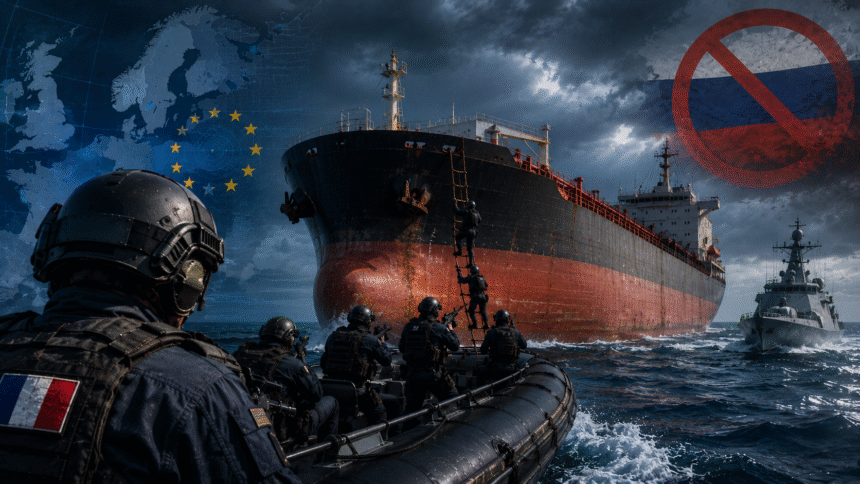
French authorities have detained an oil tanker believed to be connected to Russia’s so-called “shadow fleet,” a network of vessels allegedly used to bypass Western sanctions imposed on Russian oil exports following the war in Ukraine.
According to French maritime officials, the tanker was intercepted during a monitoring operation after investigators identified suspicious shipping activity, irregular registration details, and possible links to sanction-evasion networks operating across international waters.
Authorities stated that the vessel is suspected of transporting Russian oil through complex logistical arrangements designed to avoid European Union restrictions and international oversight mechanisms.
The detention operation was carried out with the involvement of French naval and customs authorities, who secured the vessel while investigators began examining ownership records, insurance documentation, cargo origin data, and recent shipping routes.
European officials have increasingly focused attention on what is widely referred to as Russia’s “shadow fleet” — a collection of aging tankers and anonymously operated ships believed to be helping maintain Russian oil exports despite extensive Western sanctions.
Many of these vessels reportedly operate under constantly changing ownership structures, obscure financial arrangements, and foreign flags in efforts to reduce traceability and avoid enforcement measures.
French authorities did not immediately release the name of the tanker or provide details regarding the nationality of the crew, though officials confirmed that a broader investigation is now underway.
The incident comes amid growing pressure within Europe to tighten sanctions enforcement and crack down on networks accused of undermining restrictions targeting Russian energy revenues.
Since the beginning of the Ukraine war, Western governments have imposed sweeping sanctions on Russian oil exports in an effort to weaken Moscow’s financial capacity to sustain military operations. However, analysts say alternative shipping systems and intermediary trade routes have allowed significant volumes of Russian oil to continue reaching international markets.
Security and maritime experts warn that the rapid growth of shadow fleet operations also creates broader risks, including maritime safety concerns, environmental hazards, and weakened transparency within global shipping industries.
Russia has repeatedly criticized Western sanctions as politically motivated and has insisted that its energy exports continue through legitimate international trade arrangements.
The detention of the tanker is expected to intensify discussions among European governments regarding maritime surveillance, sanctions enforcement, and energy security strategies as geopolitical tensions with Moscow continue to deepen.
French officials stated that additional legal measures could follow depending on the outcome of the investigation and whether violations of international sanctions regulations are confirmed.
The case is likely to become another focal point in the broader economic confrontation between Russia and Western powers, where energy exports remain one of the central battlegrounds.