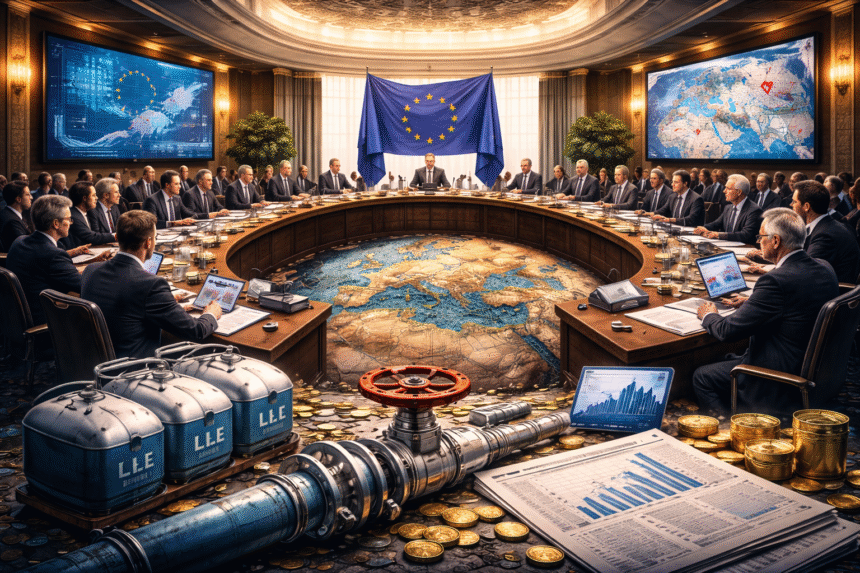
The European Union is convening a series of high-level meetings this week to assess the economic and security implications of the escalating crisis in the Middle East, with a particular focus on safeguarding gas and energy supplies across the bloc.
EU energy ministers, foreign affairs representatives, and senior officials from the European Commission gathered in Brussels amid mounting concerns over supply disruptions, volatile energy prices, and the broader impact of geopolitical instability on Europe’s economy.
Energy Security at the Top of the Agenda
At the heart of the discussions is Europe’s exposure to global gas markets, especially liquefied natural gas (LNG) shipments that transit through sensitive maritime routes. Any prolonged disruption in Middle Eastern energy exports could tighten global supply and place renewed pressure on European consumers and industries.
Officials are reviewing:
- Strategic gas storage levels across member states
- Contingency plans for potential supply interruptions
- Diversification of LNG import sources
- Coordinated purchasing mechanisms to stabilize markets
The meetings are also examining whether additional joint procurement measures — similar to those introduced during previous energy shocks — should be activated to prevent price spikes.
Geopolitical and Economic Concerns
Beyond immediate supply risks, EU leaders are evaluating the broader economic consequences of sustained instability in the region. Rising oil and gas prices could fuel inflation across the eurozone, slow industrial output, and strain household budgets.
Diplomatic discussions are also underway regarding Europe’s role in de-escalation efforts. EU foreign policy officials emphasized the importance of preventing the conflict from widening and disrupting critical trade routes.
A senior EU official noted that “energy security and economic stability are inseparable from geopolitical stability.”
Diversification and Resilience Strategy
The crisis has revived debates around long-term resilience:
- Accelerating renewable energy deployment
- Expanding interconnections between EU member states
- Strengthening gas storage coordination
- Reducing dependence on volatile supply corridors
Since previous energy crises, the EU has invested heavily in diversification efforts, including increased LNG imports and infrastructure upgrades. However, officials acknowledge that global market volatility still presents significant risks.
Market Reaction
Energy markets remain sensitive to developments in the Middle East. Gas futures have experienced sharp fluctuations, and oil prices have responded to concerns over shipping security and production stability.
EU policymakers are keen to avoid a repeat of earlier inflationary shocks that impacted households and businesses across the continent.
What Comes Next
The emergency meetings are expected to produce:
- A joint statement outlining coordinated measures
- Updated guidance on gas storage and procurement
- Continued diplomatic engagement to support regional stability
While officials stress that current supply levels remain adequate, the EU is acting proactively to prevent potential shortages and shield its economy from further disruption.
As one diplomat summarized: “Preparedness is the best defense against uncertainty.”