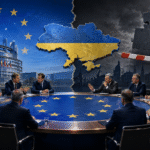


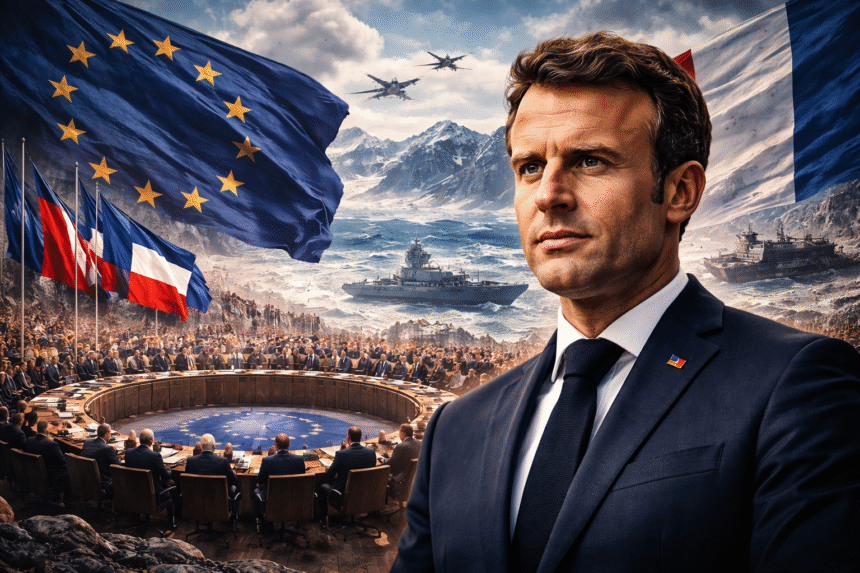
French President Emmanuel Macron described the recent diplomatic tensions between Europe and the United States over strategic interests in Greenland as a “strategic appeal” for the continent to assert its sovereignty and strengthen its collective position on the global stage.
Macron made the remarks amid ongoing discussions among European leaders and NATO partners following a series of high-profile statements by U.S. officials about Greenland’s geopolitical importance. The Arctic territory, an autonomous region of Denmark, has become the focal point of a transatlantic dispute that underscored deeper questions about European autonomy in security and foreign policy.
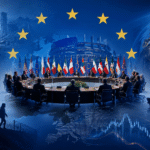
At meetings surrounding the World Economic Forum in Davos, Macron credited unified European action with helping de-escalate some of the sharpest tensions over Greenland. He argued that the episode demonstrated the potential impact when European nations speak with one voice. “When Europe reacts in a united manner, using the instruments at its disposal, when it is threatened, it can make itself respected,” Macron said, suggesting that the diplomatic friction served as a wake-up call for Brussels and EU capitals alike.
European leaders, including Denmark’s Prime Minister and officials from the EU, had collectively pushed back against what they viewed as unsolicited pressure and rhetoric from Washington regarding Greenland’s future. Macron’s emphasis on sovereignty reflects broader concerns among EU states about ensuring that decisions affecting European territory and strategic interests are shaped by Europeans themselves rather than external powers.
Some analysts interpret Macron’s framing as part of a long-term shift in European strategic thinking. With global power competition intensifying — particularly in the Arctic, where interests from Russia, China, and the United States converge — European capitals are increasingly exploring avenues for deeper defense cooperation and independent diplomatic influence. This includes strengthening NATO’s European pillar and investing in continental defense capabilities.
The dispute over Greenland also sparked discussions within NATO about alliance cohesion and burden-sharing. High-level U.S. officials have argued for a strong Arctic security posture in the face of rising geopolitical competition, but some of their comments were perceived as heavy-handed by European counterparts. Macron’s remarks signal a bid to redefine the terms of future Euro-Atlantic engagement.
As talks continue between European leaders, Denmark, and the United States on Arctic security and cooperation, Macron’s message underscores a growing European desire to shape its destiny in an era of shifting global power dynamics — not as a junior partner, but as an autonomous actor on the world stage.