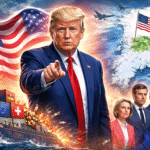


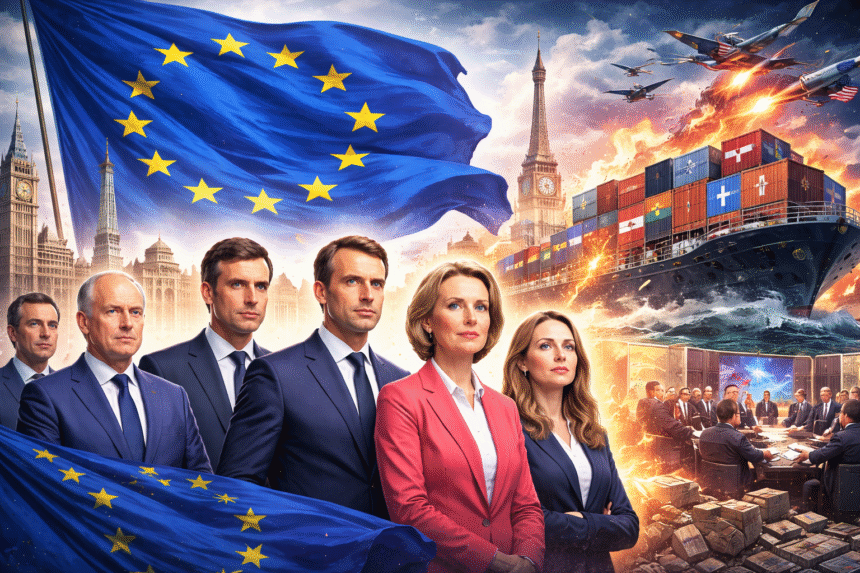
European countries have strongly rebuffed recent threats by U.S. President Donald Trump to impose tariffs on European exports unless they accede to U.S. demands regarding Greenland, signaling a united stance among the European Union (EU), Germany, France and other allies demanding de-escalation and coordinated action rather than tension.
Unified Condemnation of Tariff Ultimatum
The threat of a 10% tariff on European goods from February — increasing to 25% by June if no agreement is reached on Greenland — has been met with swift criticism from capitals across the continent. European leaders characterized the proposed measures as economic coercion that undermines decades of transatlantic partnership and respect for national sovereignty.
In a strong joint statement, German and French finance ministers declared that Europe “will not be blackmailed” by threats of punitive tariffs and emphasized the need for unity across the EU in defending shared interests. They underscored that such tactics were unacceptable among close allies and friends.
Europe’s Call for Diplomacy over Escalation
EU officials are preparing a coordinated political and economic response, including a possible assembly of emergency meetings in Brussels to chart next steps. European Commission and Council leaders are exploring tools designed to protect the bloc from “economic coercion,” while also keeping channels open for diplomatic dialogue.
French President Emmanuel Macron explicitly warned that Europe would not be swayed by intimidation, defending sovereign decision-making on geopolitical issues like Greenland while emphasizing the importance of cooperation across multiple fronts, from Ukraine to Arctic security.
UK and Nordic Reactions: A Shared Position
Across Northern Europe, leaders have echoed the EU’s stance. British Prime Minister Keir Starmer labeled the tariff threats “completely wrong” and cautioned against a trade war with key partners, stressing that decisions on Greenland’s future are for Denmark and its people alone.
At the same time, Nordic countries such as Norway and Denmark reaffirmed their commitment to upholding Greenland’s sovereignty and rejected external pressure. Their statements reflect a broad consensus among European nations that coercive economic tactics should not define transatlantic relations.
Balancing Retaliation and Diplomacy
While top officials weigh the EU’s next moves — including potential retaliatory tariffs, trade restrictions, or activating the bloc’s Anti-Coercion Instrument — there is also an emphasis on diplomacy and avoiding unnecessary escalation. Leaders have underscored that maintaining robust transatlantic ties remains important, even as they confront what many view as an unprecedented diplomatic challenge from Washington.
Broader Implications
This standoff marks a rare moment of heightened tension within the NATO and EU-U.S. alliance, raising questions about the future of trade cooperation and geopolitical coordination. As European capitals prepare for further meetings — including at international forums such as the World Economic Forum in Davos — there are calls to find a balanced strategy that safeguards European interests without tearing at the fabric of long-standing partnerships.