


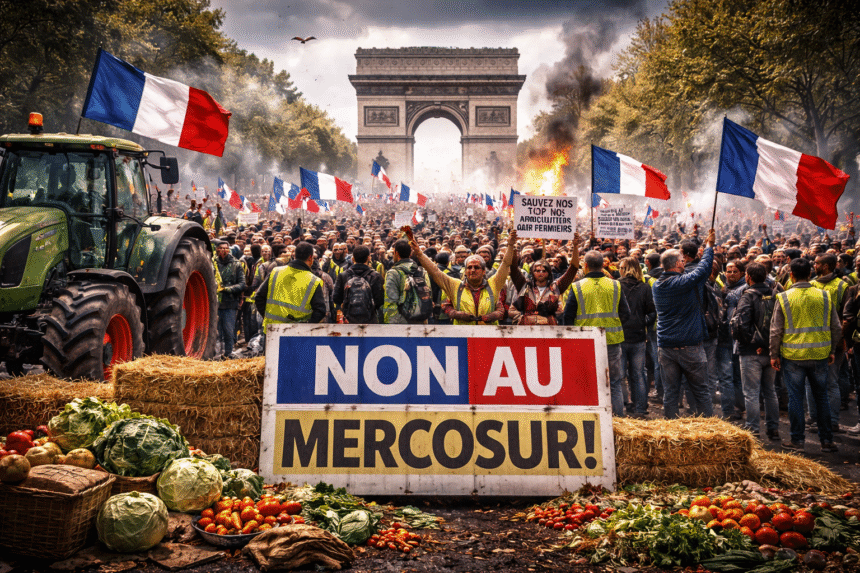
Hundreds of French farmers took to the streets of Paris to protest against the proposed EU–Mercosur trade agreement, voicing concerns that the deal could severely undermine local agriculture and expose farmers to unfair competition from South American imports.
Demonstrators, many arriving with tractors and farming equipment, gathered near government buildings and major avenues, accusing policymakers of prioritizing international trade interests over the survival of domestic farming communities.
Core Concerns of the Farmers
At the heart of the protests are fears that the agreement — which seeks to reduce tariffs and expand trade between the European Union and the Mercosur bloc (Brazil, Argentina, Uruguay, and Paraguay) — would allow cheaper agricultural products into European markets. Farmers argue that these imports do not meet the same environmental, labor, and animal welfare standards imposed on EU producers.
“We are being asked to respect strict regulations while competing with products that are cheaper because they don’t follow the same rules,” said one protest organizer. “This is not fair competition.”
Environmental and Food Safety Issues
Beyond economic concerns, protesters and environmental groups warned that the deal could encourage deforestation in the Amazon, particularly through increased beef and soy exports. Critics also raised questions about pesticide use and traceability standards in imported products, calling for stronger safeguards before any agreement is ratified.
These issues have intensified public debate in France, where agriculture remains both an economic pillar and a politically sensitive sector.
Government and EU Response
French authorities acknowledged the scale of opposition but reiterated that the agreement is still under negotiation and subject to strict conditions. Government officials stressed that France would not support any trade deal that compromises food safety, environmental commitments, or