

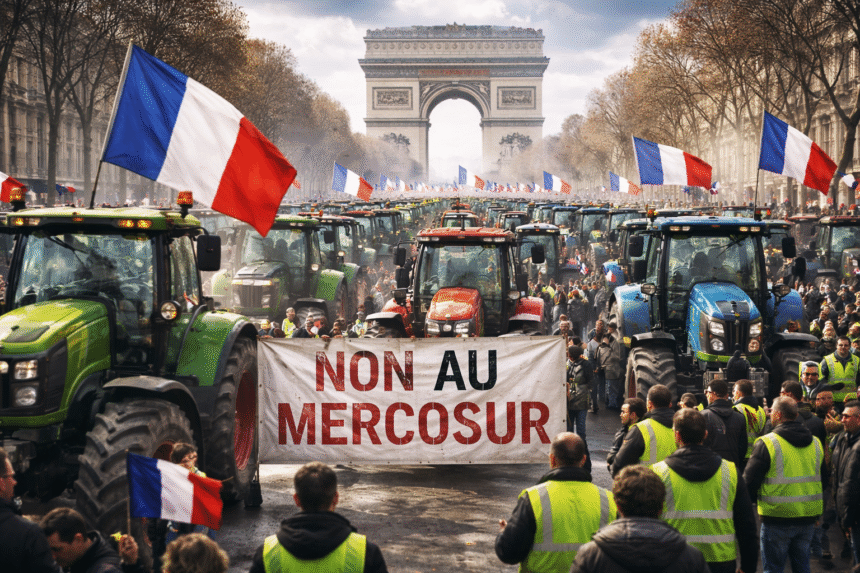
Hundreds of tractors rolled through the streets of Paris as French farmers staged large-scale protests against a proposed trade agreement between the European Union and South American countries under the Mercosur bloc, warning that the deal threatens their livelihoods and long-term income.
The demonstrations, which caused major traffic disruption around key areas of the French capital, reflect growing anger among farmers who argue that the agreement would expose them to unfair competition from lower-cost agricultural imports. Protesters say products from Mercosur countries—particularly beef, poultry, and sugar—do not face the same environmental, labor, and animal welfare standards required of European farmers.
Farm unions accused the European Union of sacrificing local agriculture in favor of trade liberalization, warning that cheaper imports could drive down prices, squeeze already narrow profit margins, and push small and medium-sized farms out of business. Many farmers also criticized what they see as a contradiction between the EU’s strict green policies and its willingness to open markets to producers operating under looser regulations.
French authorities deployed police to manage the protests, though demonstrations remained largely peaceful. Banners and tractor convoys carried messages calling for the suspension or renegotiation of the Mercosur deal, with farmers demanding stronger safeguards to protect European agriculture.
The protests come at a sensitive political moment for France and the EU, as governments attempt to balance trade ambitions with domestic pressure from agricultural communities. French officials have repeatedly voiced concerns over the agreement, signaling that Paris may resist ratification unless stronger protections are secured.
As debates over the Mercosur deal continue across Europe, the Paris tractor protests underscore the depth of rural opposition and the political risks facing European leaders if farmers’ concerns remain unaddressed.