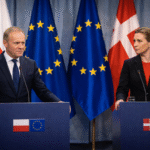


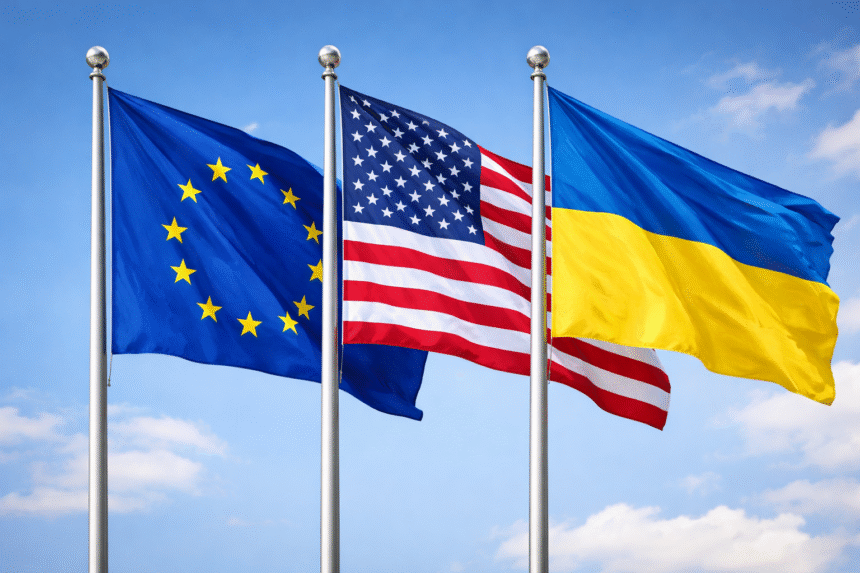
European leaders have stepped up coordination with the United States to reinforce political, military, and economic support for Ukraine, as the conflict enters its fourth year with no clear end in sight. The intensified talks reflect growing recognition on both sides of the Atlantic that long-term strategies are needed to match the prolonged nature of the war.
Meetings involving senior officials from the European Union, NATO members, and U.S. policymakers have focused on aligning assistance plans, avoiding gaps in military aid, and ensuring continued pressure on Moscow. Leaders stressed that unity remains essential to sustaining Ukraine’s defense and deterring further escalation.
Military and Security Coordination
Discussions have centered on synchronizing weapons deliveries, air-defense systems, ammunition supplies, and training programs. European governments and Washington are also working to expand defense-industrial capacity, aiming to move from emergency support toward predictable, long-term production that can sustain Ukraine’s needs over time.
Officials noted that better coordination reduces duplication, speeds up deliveries, and strengthens NATO’s eastern flank, particularly for countries bordering Ukraine and Russia.
Economic Support and Sanctions
Beyond the battlefield, European and U.S. leaders reviewed macro-financial assistance to keep Ukraine’s economy functioning under wartime conditions. Talks included budget support, energy infrastructure protection, and preparations for post-war reconstruction.
Sanctions enforcement was another key theme, with renewed efforts to close loopholes, curb sanctions evasion, and maintain economic pressure on Russia as part of a broader strategy to influence the conflict’s trajectory.
Political Unity and Long-Term Commitment
European leaders reiterated that any future diplomatic process must respect Ukraine’s sovereignty and be led by Kyiv. While emphasizing the importance of transatlantic partnership, several officials also highlighted Europe’s responsibility to shoulder a larger share of the burden, signaling a push toward greater strategic autonomy alongside close cooperation with the United States.
As the war passes the three-year mark, the coordinated stance between Europe and Washington sends a clear message: support for Ukraine is not a short-term policy, but a long-term commitment shaped by shared security interests and the defense of the international rules-based order.