

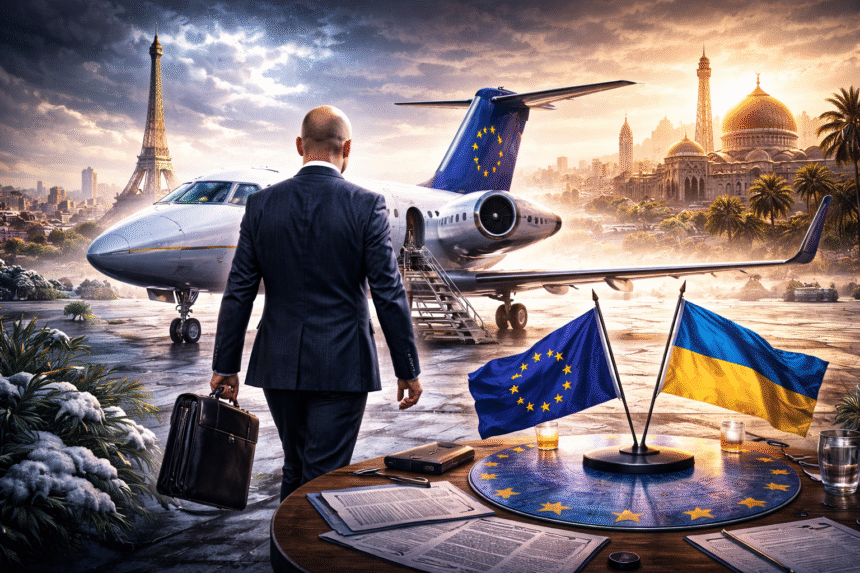
The President of the European Council is embarking on a diplomatic tour beginning in Paris and continuing to several key capitals in the Middle East, aiming to coordinate international support for Ukraine while exploring viable pathways toward future peace negotiations.
European officials say the trip reflects growing recognition that ending the conflict will require not only military backing for Kyiv, but also wider diplomatic engagement with regional and global partners.
Coordination With France First
Paris will be the first stop, where the Council President is scheduled to meet French leaders to review Europe’s ongoing commitments to Ukraine — from military aid and reconstruction funding to energy security and sanctions policy.
French officials have emphasized that European unity remains essential. Discussions are expected to focus on:
- coordinating long-term security guarantees for Ukraine,
- stabilizing Europe’s defense industries,
- and preventing “war fatigue” among European publics and governments.
A Strategic Shift Toward the Middle East
Following the Paris meetings, the President will travel to several Middle Eastern countries. These visits aim to engage regional actors whose relationships with both Moscow and Western capitals give them potential influence in future mediation efforts.
Diplomats say the conversations will center on humanitarian concerns, maintaining global food and energy stability, and exploring whether Middle Eastern partners could play constructive roles if formal peace talks eventually take shape.
Balancing Support and Diplomacy
European leaders insist that diplomatic outreach does not signal weakening support for Ukraine. On the contrary, they argue that credible negotiations can only occur if Kyiv’s sovereignty and security are firmly defended.
“Peace must be just, sustainable, and grounded in international law,” an EU official said. “That means supporting Ukraine today while preparing responsibly for tomorrow’s dialogue.”
Challenges Ahead
Despite growing calls for diplomacy, significant obstacles remain:
- Russia and Ukraine currently hold incompatible positions on territorial control.
- Trust between the sides is virtually nonexistent.
- Global powers remain divided on how and when negotiations should begin.
Analysts caution that this tour is unlikely to produce immediate breakthroughs, but may lay groundwork for future efforts.
A Broader European Strategy
The President’s trip highlights Europe’s evolving approach: combining deterrence, economic pressure, humanitarian aid, and steady diplomatic engagement. European institutions hope that building wider international consensus now will prevent the conflict from becoming a prolonged stalemate with global consequences.
Looking Forward
The Council President is expected to report findings to EU leaders at an upcoming summit, where discussions on Ukraine — including financing, security commitments, and diplomatic outreach — will once again dominate the agenda.
For Europe, the stakes remain high: preserving regional security, upholding international law, and supporting a path toward peace that does not reward aggression.