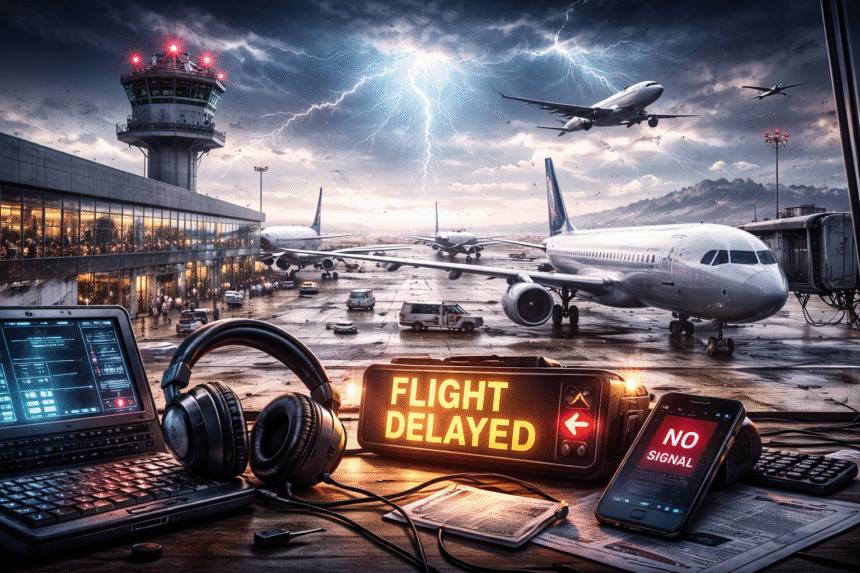
Greek authorities temporarily suspended air traffic across several major airports after a sudden malfunction affected wireless communication systems used by air-traffic controllers. The disruption caused widespread delays, diversions, and cancellations before flights gradually resumed several hours later.
The incident — described by aviation officials as “highly unusual” — led to an immediate safety protocol: suspending takeoffs and restricting landings until stable communication lines could be restored.
Safety First
Officials from the Hellenic Civil Aviation Authority said the malfunction impacted the ability of controllers to maintain secure and continuous communication with aircraft in Greek airspace — a critical component of flight safety.
“When communication becomes unreliable, the safest decision is to ground activity until full control is restored,” one aviation spokesperson explained.
Airlines rerouted several flights to neighboring countries, while others remained on the tarmac awaiting clearance. Passengers at Athens International Airport reported long lines, limited updates, and uncertainty about departure times.
Gradual Return to Normal
After emergency technical teams worked to diagnose and repair the fault, systems began returning online. By late evening, flights were allowed to take off under controlled conditions, with priority given to delayed services and international routes.
Authorities emphasized that there is no indication of sabotage or cyberattack, though a full investigation is underway to determine the root cause — whether technical, software-related, or a power-relay issue within the communications network.
Airlines and Passengers Affected
Several major European carriers reported disruptions, including delays to connecting flights and missed schedules. Passenger associations urged airlines to provide compensation and support, especially for those stranded overnight.
Meanwhile, Greek officials apologized for the inconvenience but reaffirmed that safety concerns must always override punctuality.
Broader Questions Raised
The malfunction has sparked broader discussion about the resilience of aviation infrastructure across Europe. Experts warn that as systems become increasingly digitalized, the need for robust backup communication channels grows more critical.
For Greece, the incident serves as a reminder of the vulnerabilities in a country heavily dependent on tourism and international connectivity.
Next Steps
Investigators will review maintenance logs, software updates, and system security protocols to prevent a similar breakdown in the future. A detailed report is expected in the coming weeks.
For now, air traffic has largely returned to normal — but with renewed attention on the fragile systems that keep Europe’s skies moving smoothly.