


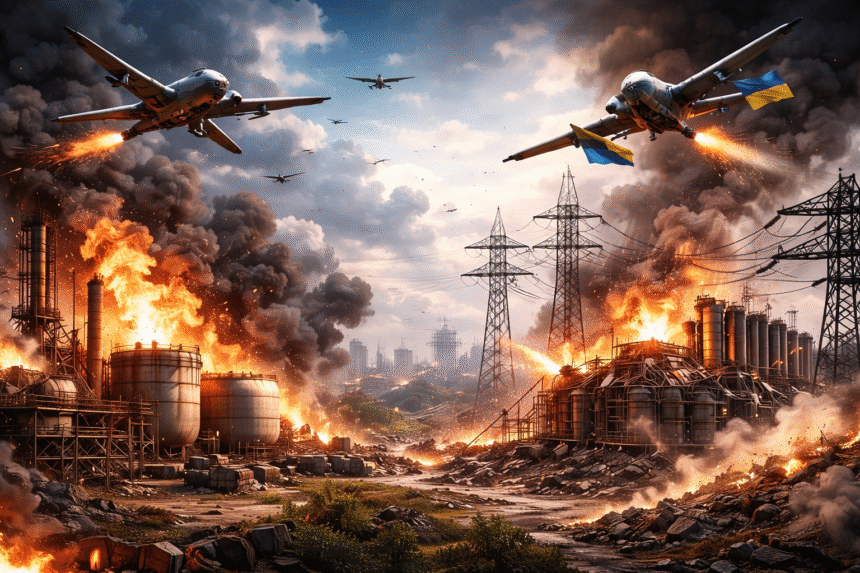
Tensions escalated again on Tuesday as Russia and Ukraine traded accusations over a new wave of drone strikes targeting critical infrastructure, each side blaming the other for intensifying attacks amid ongoing efforts to secure international backing.
Ukrainian officials reported multiple overnight drone strikes on power stations and logistics hubs in eastern and central regions, leading to temporary outages and disruptions to railway services. Emergency crews said they managed to restore electricity to most affected areas by morning, but warned that repeated strikes are pushing the energy grid to “dangerous limits.”
Russia, meanwhile, accused Ukraine of launching cross-border drone attacks on oil depots and military facilities in several regions close to the front line. Local authorities in Russia’s Belgorod and Kursk regions said fires broke out after drones exploded near storage facilities, though they reported no casualties.
Competing Narratives — Same Pattern
Both sides denied responsibility for civilian harm and accused the other of deliberately targeting infrastructure.
Ukrainian military spokespeople argued that the attacks on their energy network were meant to “pressure civilians during winter and weaken national morale.” Moscow rejected the claim, insisting its operations focus on what it calls “military and logistical targets.”
Russian officials, in turn, accused Kyiv of attempting to strike fuel supplies critical to industry and the war effort. Ukrainian leaders did not comment directly on those accusations but reiterated that any operations conducted beyond Ukraine’s borders are aimed strictly at reducing Russia’s capacity to wage war.
Civilian Impact Growing
The continued drone warfare has renewed fears among humanitarian groups about the vulnerability of civilian infrastructure. Rolling power shortages have become more frequent in parts of Ukraine, while local Russian residents living near the border have reported repeated evacuations due to explosions and debris.
Analysts say both countries are increasingly turning to drones because they are cheaper, harder to detect, and capable of striking deep behind enemy lines — even though they carry significant risks for non-combat areas.
Diplomatic Pressure Mounts
The exchange of accusations comes at a time when Western and international diplomats are pushing both sides to de-escalate. However, officials warn that the expanding use of drones complicates monitoring and verification mechanisms, making it harder to enforce any future ceasefire.
For now, neither Moscow nor Kyiv shows signs of backing down. Instead, both appear determined to continue drone operations as part of a wider battlefield strategy — even as civilians on both sides brace for further disruption.