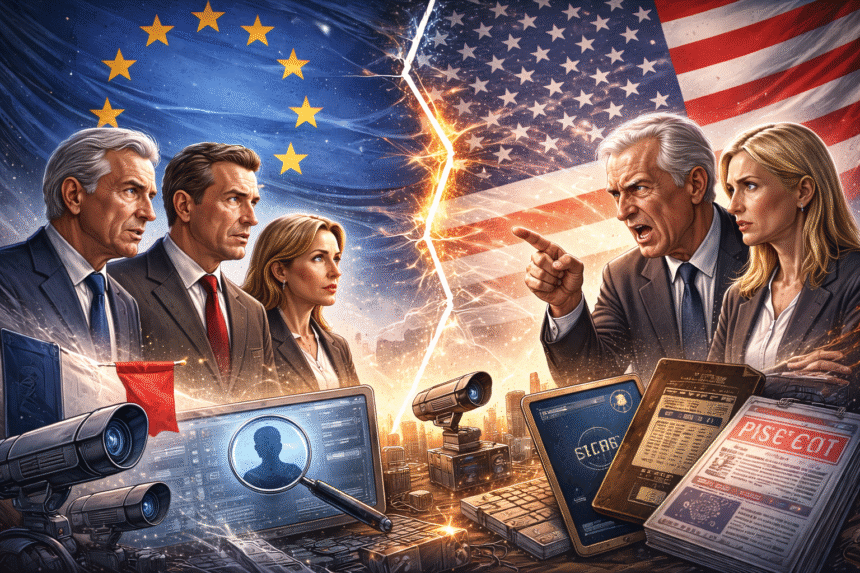
A U.S. decision to impose visa bans on several European figures allegedly linked to digital surveillance programs has sparked diplomatic tension across the Atlantic, prompting sharp condemnations from both France and Germany and raising questions about coordination between allies.
U.S. officials said the restrictions target individuals believed to have facilitated abusive surveillance practices — including monitoring dissidents, journalists, and political opponents — in violation of human-rights standards. The move is part of Washington’s broader effort to curb the misuse of advanced spyware and data-tracking technologies worldwide.
But European governments say the decision was made without consultation and risks undermining trust at a time when transatlantic cooperation is crucial.
France: A warning against unilateral actions
The French Foreign Ministry criticized the measure as “unilateral and counterproductive,” arguing that complex cases involving digital surveillance should be handled through coordinated legal and regulatory channels — not public blacklists.
Paris emphasized that the EU already has mechanisms for sanctioning abusive technologies and warned the U.S. against taking actions that could be seen as extraterritorial pressure on European governance.
Germany: Questions of sovereignty and due process
Berlin echoed the criticism, stressing that allegations of digital misconduct require transparent investigation and due process.
A German government spokesperson said Germany had requested detailed evidence from Washington and cautioned that sanctions affecting European nationals can become “diplomatically sensitive” if imposed without consultation.
Bigger battle: who sets the rules for digital power?
The dispute highlights broader disagreements between the EU and the U.S. over how to regulate rapidly evolving surveillance technologies.
- The EU has leaned toward strict regulation, data-protection frameworks, and export controls.
- The U.S. increasingly relies on targeted sanctions and visa bans to deter misuse.
Analysts say both sides share similar concerns — preventing the abuse of digital tools — but diverge on methods, accountability, and jurisdiction.
Calls to de-escalate
Despite harsh rhetoric, officials on both sides insist that dialogue must continue. EU diplomats say they will press for clearer consultation procedures before future sanctions are issued, while U.S. officials maintain that human-rights violations cannot be ignored — even when allies are involved.
“Transatlantic unity is vital,” one EU official said. “But unity depends on transparency — especially in areas as sensitive as digital surveillance.”
What’s next
Talks are expected at upcoming EU-U.S. forums, where both sides will seek common ground on regulating spyware, cross-border data access, and accountability standards.
For now, the visa ban stands — and so do the questions it raised about power, privacy, and how far trusted allies will go to hold one another accountable in the digital age.