


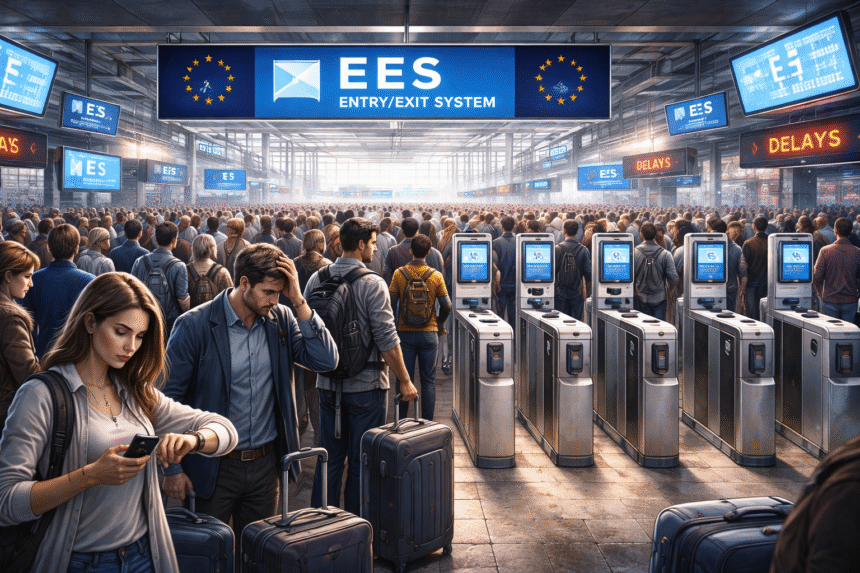
Airports across the European Union are facing warnings of potential travel chaos following the implementation of the new Entry/Exit System (EES), as technical problems and staff shortages have already led to queues lasting up to three hours at some major hubs.
The EES, designed to digitally register the entry and exit of non-EU travelers by recording biometric data such as fingerprints and facial images, aims to strengthen border security and modernize migration controls. However, its initial rollout has exposed serious operational challenges at airports, particularly during peak travel periods.
Passengers and airport operators have reported system glitches, slow processing times, and insufficient trained staff to handle the new procedures. These issues have caused long delays at passport control, with travelers missing connections and overcrowding reported in arrival halls.
Airlines and airport authorities have warned that the situation could worsen during busy seasons, including holidays, unless additional staff are deployed and technical systems are stabilized. Industry representatives have urged EU governments to accelerate training, improve system reliability, and introduce temporary contingency measures to prevent large-scale disruption.
Several EU member states have acknowledged the problems and confirmed that adjustments are underway, including phased implementation, increased staffing, and technical updates. However, critics argue that the system was introduced without adequate real-world testing, placing the burden of transition on travelers and frontline border staff.
As the EES continues to be rolled out across the bloc, travelers are being advised to arrive at airports significantly earlier than usual and to prepare for extended waiting times. The situation has reignited debate over the EU’s ability to implement large-scale digital border systems without disrupting everyday travel and commerce.