

Disagreements among European Union member states over the use of frozen Russian assets and the legal frameworks governing Ukraine financing continued to dominate high-level negotiations, underscoring deep divisions within the bloc on how far Europe should go in funding Kyiv’s war effort.
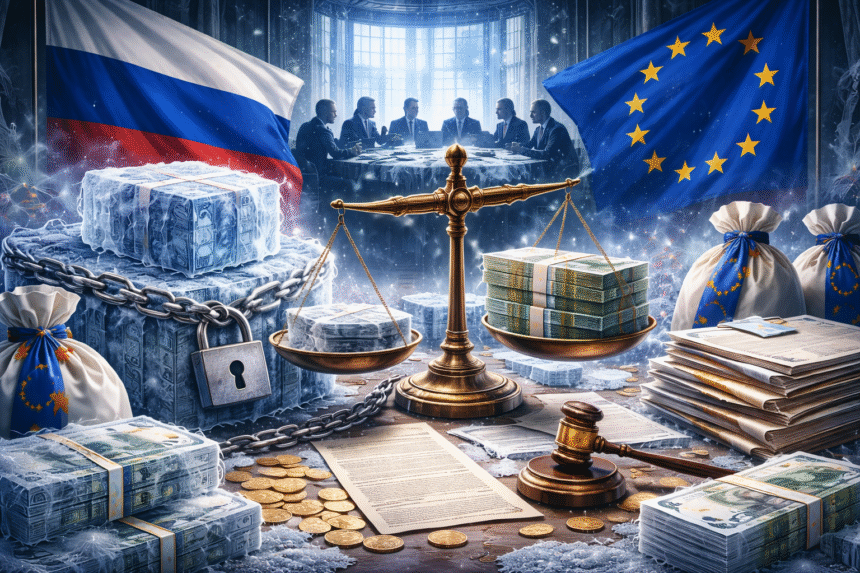
At the heart of the debate is whether Russian sovereign assets, frozen in European jurisdictions since the start of the war, can be legally used as collateral or directly leveraged to support Ukraine. While some EU countries argue that such a move is both politically justified and financially necessary, others remain cautious, warning of serious legal risks, potential violations of international law, and long-term consequences for Europe’s financial credibility.
Countries hosting large amounts of frozen Russian funds have expressed particular concern, emphasizing the need for airtight legal guarantees to prevent lawsuits, asset seizures, or retaliatory measures by Moscow. These states have called for detailed legal mechanisms that would shield governments and financial institutions from future claims.
As a result, negotiations have increasingly focused on financing procedures, guarantees, and risk-sharing mechanisms, rather than political intent. EU officials acknowledge broad agreement on the need to sustain Ukraine economically and militarily, but less consensus on the methods to achieve this without exposing the bloc to legal and financial fallout.
European diplomats say discussions are ongoing and that multiple legal models are still under review, including the use of profits generated from frozen assets rather than the assets themselves. However, no definitive framework has yet emerged.
The continued deadlock highlights the challenge facing the EU as it seeks to balance support for Ukraine, adherence to international law, and the protection of its financial system—an issue likely to remain on the agenda in upcoming summits as pressure mounts to secure long-term, sustainable funding for Kyiv.