


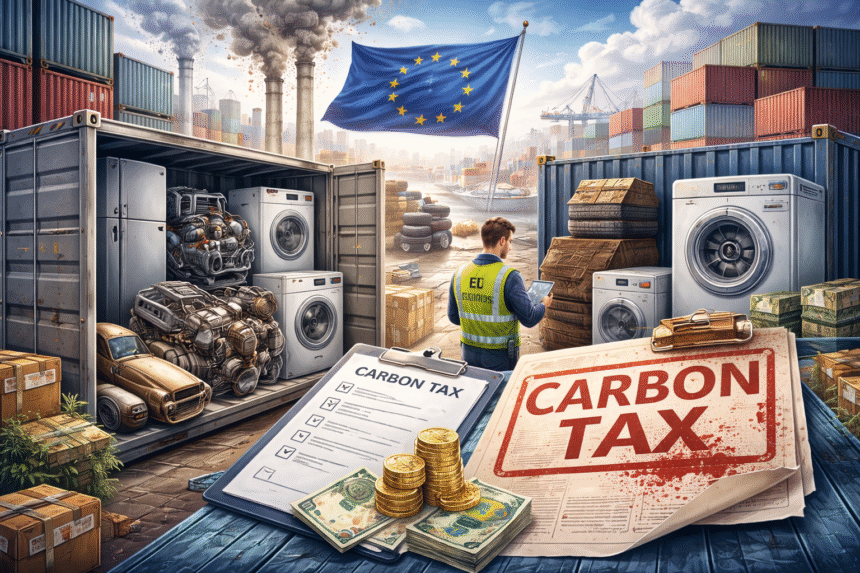
The European Union is planning to expand its Carbon Border Adjustment Mechanism (CBAM) to include a wider range of products, such as car parts, refrigerators, and washing machines, as part of its broader effort to curb carbon-intensive imports and protect its climate policies. The move signals a significant tightening of the EU’s approach to tackling global emissions linked to international trade.
Originally introduced to cover sectors like steel, cement, aluminum, fertilizers, electricity, and hydrogen, the carbon border tax aims to prevent “carbon leakage” — a situation where production shifts outside the EU to countries with weaker environmental regulations. By extending the levy to finished and semi-finished industrial goods, Brussels hopes to close loopholes that allow high-emission products to enter the European market indirectly.
Under the proposed expansion, imported products would be subject to a carbon cost reflecting the emissions generated during their production, aligning them more closely with the standards faced by European manufacturers under the EU’s emissions trading system. EU officials argue this is necessary to ensure fair competition and to incentivize cleaner production methods worldwide.
The proposal has drawn mixed reactions. European industry groups have largely welcomed the move, saying it strengthens competitiveness and rewards companies that invest in cleaner technologies. Environmental organizations also support the expansion, viewing it as a crucial step toward reducing global emissions and reinforcing the EU’s leadership on climate action.
However, the plan is expected to face resistance from trading partners, particularly emerging economies, which argue that the measure could act as a trade barrier and disproportionately affect developing countries. Some governments have warned that the expanded carbon tax could lead to disputes at the World Trade Organization.
The European Commission is expected to consult member states and industry stakeholders before finalizing the proposal. If adopted, the expanded carbon border tax would mark one of the most ambitious attempts globally to link trade policy directly with climate objectives, reshaping how environmental costs are reflected in international commerce.