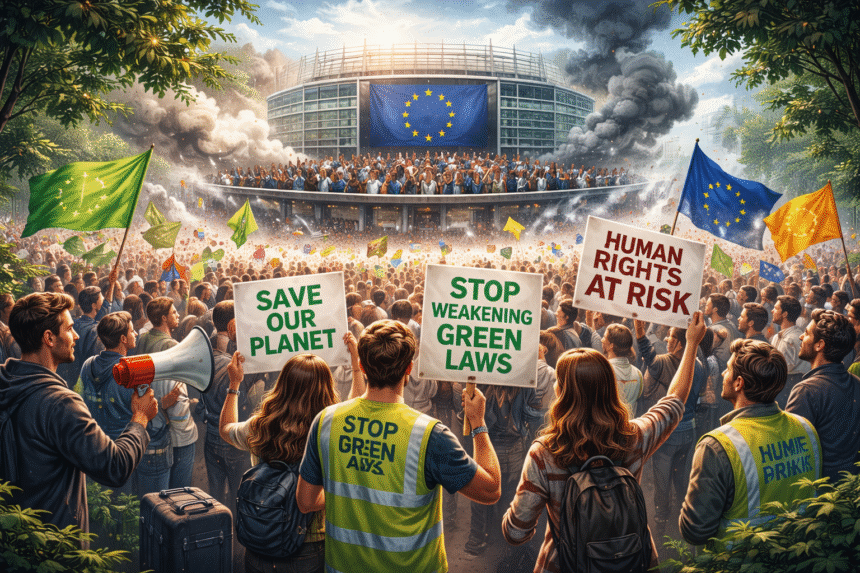
The European Parliament has voted in favor of easing several climate and human rights–related regulations, a move that has sparked strong backlash from environmental groups, human rights organizations, and civil society activists across Europe. Critics warn that the decision risks undermining the European Union’s global credibility on sustainability, corporate accountability, and ethical governance.
The vote focused on scaling back key elements of environmental due diligence and human rights compliance rules that were designed to hold companies accountable for their impact on climate change, labor conditions, and supply chains both within and outside the EU. Supporters of the changes argue that the existing regulations place excessive administrative and financial burdens on European businesses, particularly small and medium-sized enterprises, at a time of economic uncertainty.
However, environmental organizations say the rollback represents a significant retreat from the EU’s Green Deal commitments. Groups such as Greenpeace, Amnesty International, and Friends of the Earth argue that weakening these rules sends the wrong signal as the world faces accelerating climate impacts, rising emissions, and growing evidence of human rights abuses linked to global supply chains.
Human rights advocates are particularly concerned that the revised framework could reduce protections for workers and communities in developing countries, where European companies often source raw materials and labor. They warn that fewer compliance requirements may allow corporations to avoid responsibility for environmental damage, forced labor, and unsafe working conditions.
Several lawmakers who opposed the vote accused the Parliament of prioritizing short-term economic interests over long-term sustainability and moral responsibility. They also warned that the decision could create legal uncertainty, weaken enforcement mechanisms, and fragment the EU’s approach to climate leadership at a time when coordinated global action is urgently needed.
The European Commission now faces mounting pressure to clarify how it plans to preserve the core objectives of climate action and human rights protection despite the parliamentary decision. As public criticism grows, the debate highlights deep divisions within the EU over how to balance competitiveness, regulation, and ethical responsibility in an increasingly fragile global economy.