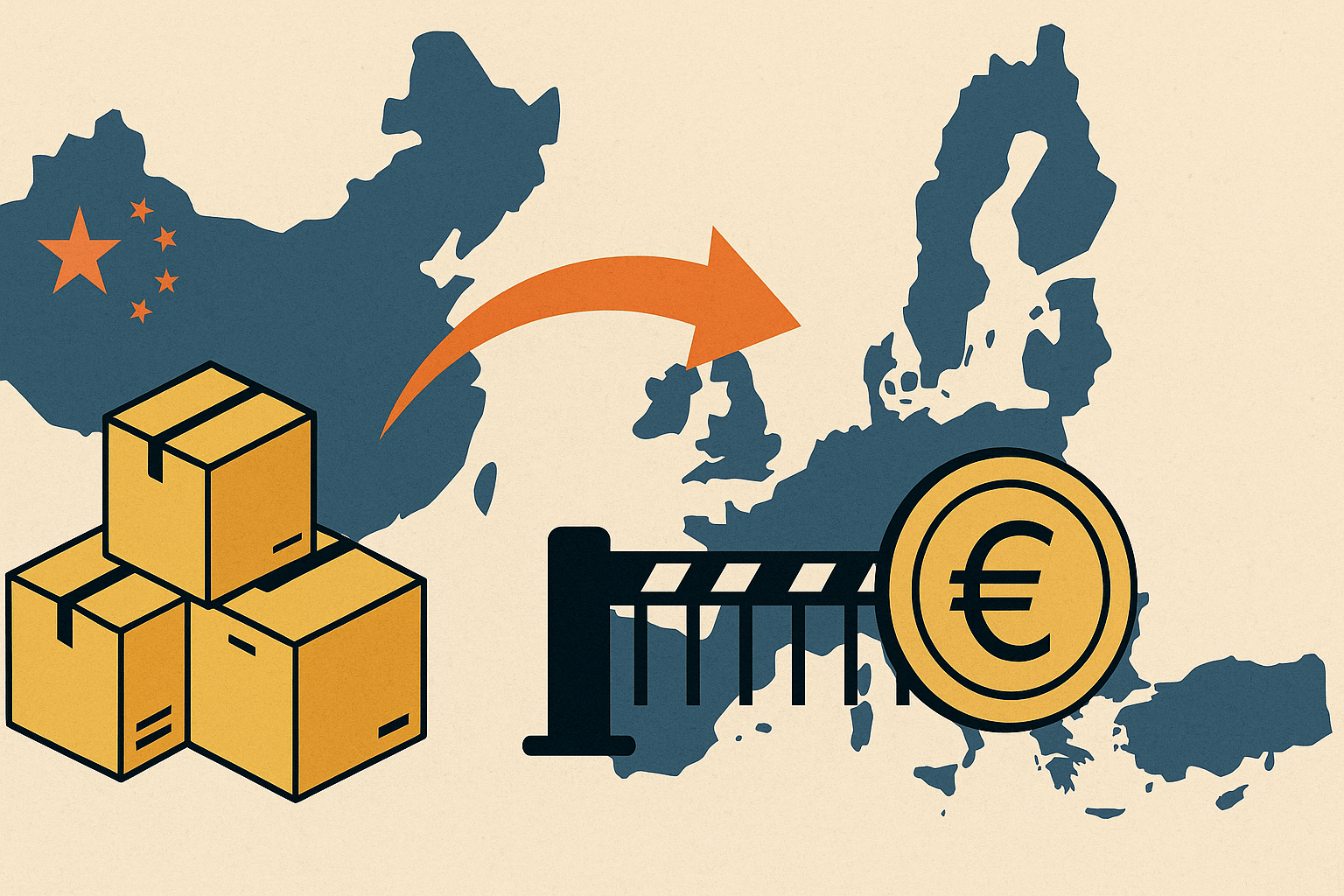
Brussels is pushing to accelerate the introduction of customs fees on low-value parcels entering the EU from major Chinese e-commerce platforms such as Shein, Temu, and Alibaba, aiming for implementation in early 2026 — more than two years earlier than planned.
The European Commission urged EU finance ministers on Thursday to approve the new timeline, arguing that faster action is needed to curb unfair competition and support European retailers struggling against a flood of ultra-cheap imports.
Commission Warns of Urgent Trade Challenge
In a letter to EU ministers, trade commissioner Maroš Šefčovič said the measure is essential to strengthen the EU’s competitiveness amid rapidly shifting global trade dynamics.
Accelerating the removal of customs exemptions, he wrote, would send “a strong signal that Europe is serious about ensuring fair conditions for its businesses.”
The proposal highlights the Commission’s increasingly assertive approach toward China, following concerns that Beijing’s trade practices distort the European market. The timing also comes shortly before a G20 summit where EU leaders are expected to confront Chinese President Xi Jinping over trade tensions.
Support from Key Member States
France has already endorsed the plan to fast-track the customs changes, while Dutch finance minister Eelco Heinen publicly stressed that the EU must “get a grip” on cheap Chinese parcels overwhelming its market.
Under the current rules, goods valued under €150 can enter the EU without customs duties. Last May, the Commission proposed removing this threshold by mid-2028 and introducing a flat €2 fee on all parcels. But Šefčovič argued that waiting until 2028 is no longer acceptable.
“European industries, particularly retailers, have repeatedly underlined that this distortion of competition be removed without delay,” he wrote. “It will be extremely difficult to explain to our businesses and citizens why the EU cannot act faster.”
Chinese sellers accounted for over 80% of the 4.6 billion parcels bought by European consumers last year.
Beijing Warns Against Protectionism
Although not addressing the customs proposal directly, China’s ambassador to the EU, Cai Run, cautioned in a speech on Thursday against the growing “politicisation” of trade and the rise of “protectionism.”
He called for disputes to be resolved through dialogue and urged the EU to maintain a “fair, just and non-discriminatory business environment.”
Next Steps for EU Governments
EU member states must now agree on the earlier timeline and negotiate the structure of the flat customs fee. Several countries — including Romania — have already introduced national charges of up to €5 per parcel, adding pressure on Brussels to adopt a unified approach.
Šefčovič emphasised that the issue goes beyond technical reform, calling it “a question of Europe’s capacity to act in defence of its economic interests.”
“A modern, competitive Europe,” he said, “must be able to better protect its borders for goods and uphold fair competition.”