

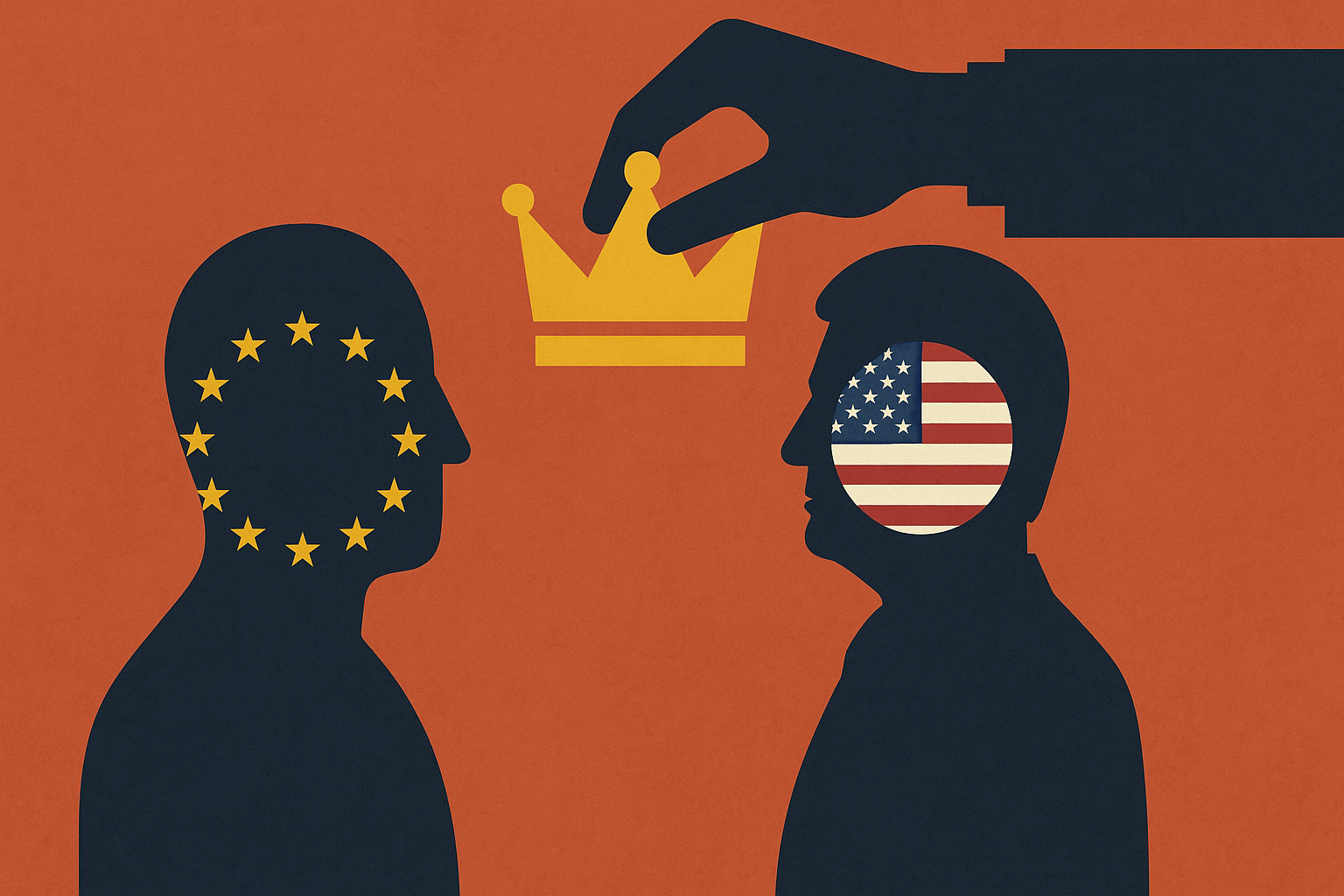
The trade agreement signed between the United States and the European Union in late July has sparked criticism for weakening the bloc’s global standing and exposing its political fragility. Critics argue that the deal reflects a pattern of “vassalisation heureuse” — willing submission — in which Europe sacrifices strategic autonomy for short-term protection.
A Strategic Trap for the EU
The agreement, reached under US President Donald Trump, is seen by some analysts as the result of overt pressure exploiting the EU’s structural vulnerabilities. What had once been described as a strategic balancing act between market priorities, democratic values, and climate commitments has now hardened into a systemic trap.
- Market Power Undermined – Trump’s approach has highlighted the gap between the EU’s economic weight and its political influence. Europe’s reliance on US backing for Ukraine may have driven it to accept terms that undermine its ability to defend its own interests, particularly ahead of the upcoming Trump-Putin meeting in Alaska.
- Climate Goals Sidestepped – The deal’s requirement for increased European investment in US liquefied natural gas undercuts the EU’s climate agenda, demonstrating how easily environmental objectives can be set aside.
- Democratic Response Lacking – The EU and its member states have failed to mount a robust democratic defence of their institutions, leaving them vulnerable to external pressure.
From Influence to Control
Observers warn that the White House’s aim may extend beyond influencing the western order to reshaping it into a geopolitical space where no sovereignty exists outside Washington’s orbit. In this vision, states would formally retain independence but operate under enforced alignment, resembling a digital-age version of the Warsaw Pact.
While this outcome is not yet inevitable, elements of such a system are emerging — from US challenges to EU autonomy in digital governance and climate policy to disputes over allies’ territorial integrity.
A Protection Racket, Not an Alliance
Critics liken the EU-US arrangement to a protection racket: compliance in exchange for avoiding harsher punishment. The short-term benefits — a sense of stability and reduced confrontation — come at the cost of political imagination and strategic autonomy.
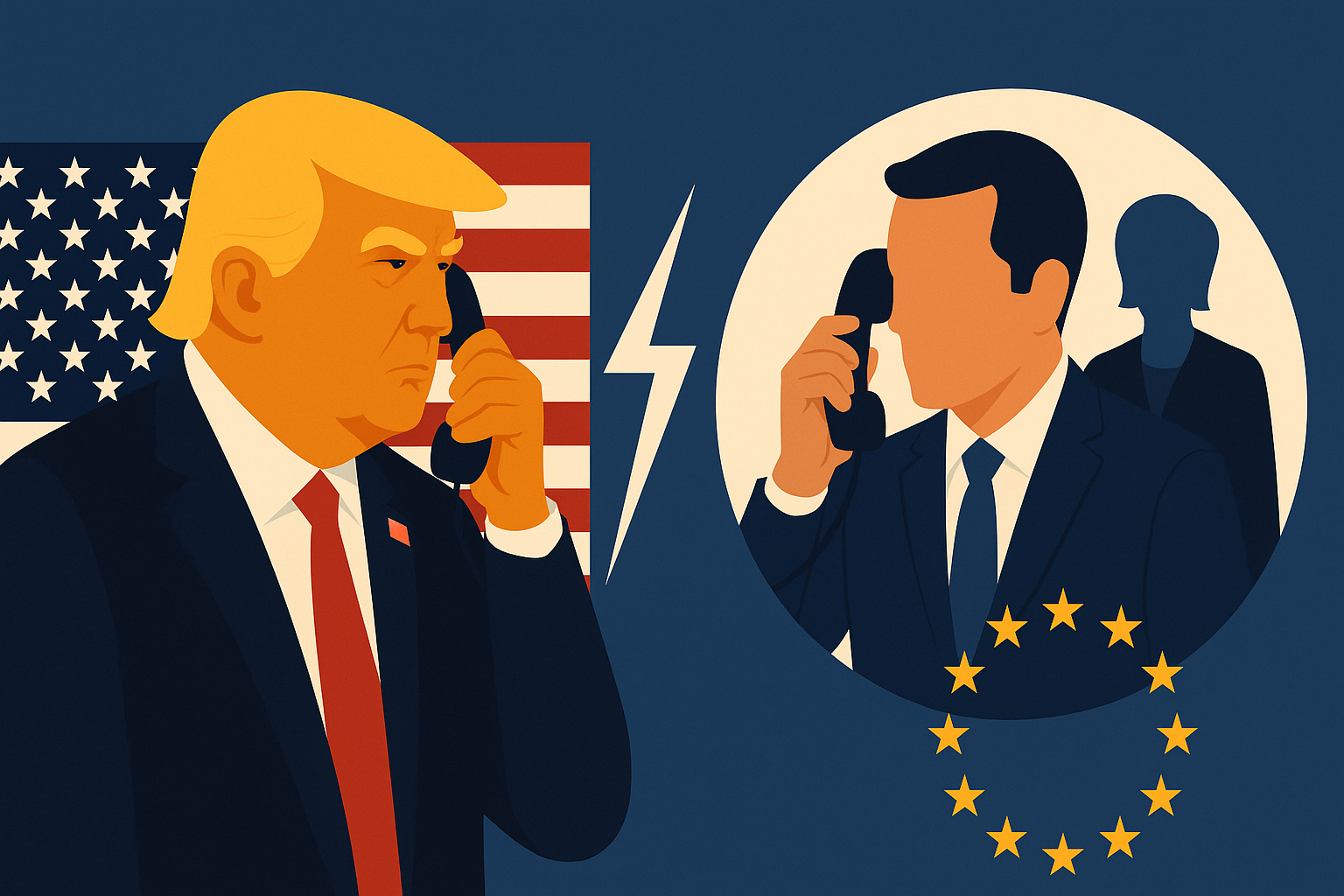
This dynamic was symbolised in the “tense smiles” of European Commission members beside a triumphant Trump at the trade deal announcement. Over time, such submission breeds defeatism, normalising the idea that Trump’s project is inevitable and resistance futile.
Public Opposition vs. Political Paralysis
Despite polling that shows growing European hostility to Trump’s policies, EU institutions and political elites have failed to channel public sentiment into meaningful pushback. Analysts suggest this paralysis is strategic — by making Europeans doubt their own power, Trump reduces the EU’s ability to act as a counterweight.
Former ECB president Mario Draghi has warned against Europe’s “slow agony” — a gradual erosion of sovereignty disguised as stability. For now, many leaders appear willing to extend the illusion of security inherited from decades of peace, even as the geopolitical environment shifts.
The Road Ahead
While Trump is building an ambitious imperial project, history shows that such designs can falter when confronted with determined resistance. The existential question for Europe is whether it will remain a “happy vassal” or find the political will to assert its autonomy before the balance of power is irreversibly altered.