


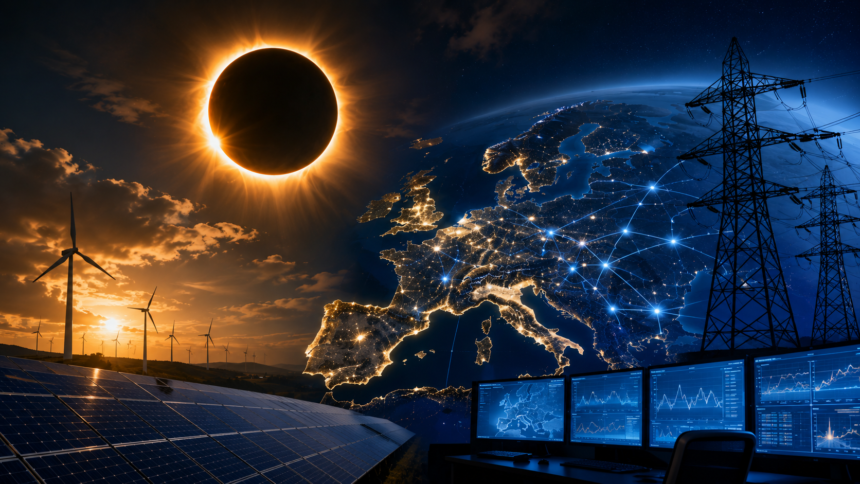
European electricity-grid operators are preparing for a temporary decline in solar generation during the total solar eclipse expected on August 12, 2026, while officials assess how the event could affect electricity supply and demand across the continent.
The eclipse’s path of totality will cross parts of Greenland, Iceland and northern Spain, while much of the rest of Europe will experience a partial eclipse. Mainland Spain will witness totality for the first time in more than a century, with darkness occurring close to sunset in several areas.
When the Moon blocks sunlight, electricity generated by solar installations can fall rapidly before increasing again as the eclipse passes. Grid operators must therefore ensure that other power sources and cross-border electricity connections are available to compensate for the temporary reduction.
European Commission spokesperson Anna-Kaisa Itkonen said the eclipse’s overall impact was not expected to be significant because it would take place during the afternoon, after the main period of peak solar production. Operators are nevertheless making preparations to maintain stable electricity supplies throughout the event.
Industry estimates indicate that solar generation across the European Union could temporarily decline by approximately 9,700 megawatts. No major supply disruptions are expected, although Spain is likely to experience the most noticeable effect because of its extensive solar-power capacity and position within the eclipse’s path.
The preparations reflect Europe’s growing dependence on renewable energy and the need for grid systems capable of responding quickly to sudden changes in solar and wind generation.